
Larger breasts with implants or, in some cases, your own fat, decided after chest measurements and a health check.
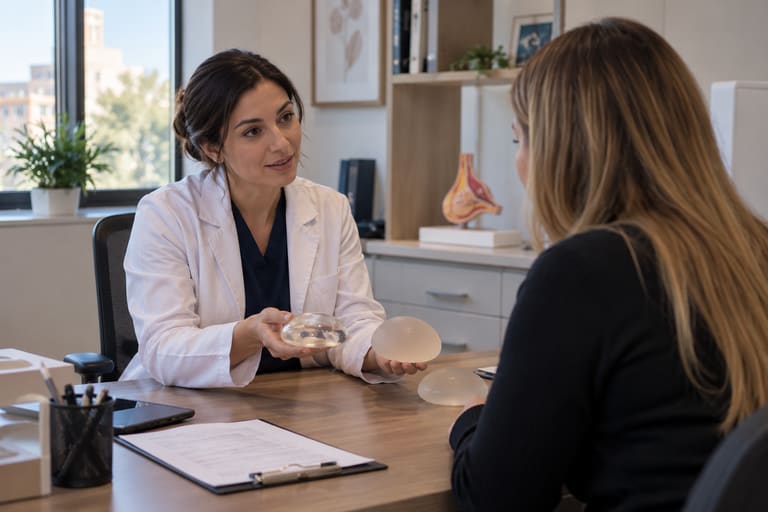
Breast augmentation makes the breasts larger, usually with silicone implants placed either in front of or beneath the chest muscle. Fat transfer, using fat from your own body, can give a more modest increase.
The size and shape of implant are chosen from measurements of your chest and breast tissue, not just from what you would like. Implants do not last a lifetime, and many people will need another operation at some stage.
Read this as a general outline. Only the surgeon who would operate can say whether the operation suits you, once they have examined you in person, gone through your medical history and seen any tests they ask for.
You send photos and your medical history, and the surgeon tells you whether the operation looks suitable and what it could realistically do for you.
The surgeon examines you, finalises the plan, takes you through the risks and arranges the pre-operative tests; only then do you sign the consent form.
Under general anaesthetic, the implants go in through a small cut, normally in the crease beneath the breast.
Before you leave, the surgeon checks how you are healing. You go home with written aftercare instructions and remote follow-up.
Feeling tight, swollen and sore is normal. You wear a supportive surgical bra and keep your arms below shoulder height.
Stitches are checked or taken out. Many people are back at a desk, while still avoiding lifting and exercise for the upper body.
Once the surgeon agrees, you gradually return to exercise, still wearing a supportive bra.
The breasts take on their final shape and the scars mature. The outcome is generally judged after several months.
Everyone heals at their own pace, and the instructions from your clinic always come first.
There is no set lifespan, but many people have them replaced or removed within 10 to 20 years.
Often, yes, particularly when the cut is made beneath the breast. Talk your plans through with the surgeon.
That varies with the operation. Many trips are planned for one to two weeks, so the surgeon can see you and take out stitches or drains before you go. Flying too soon after surgery makes blood clots more likely, so your surgeon tells you when it is safe to fly.
It depends on the operation the surgeon advises after examining you, the nights in hospital and anything done at the same time. You get an itemised quote in writing before you book, and you are free to say no.
Breast Augmentation is priced individually after a specialist reviews your case. You receive a written, itemised quote before anything is booked.
From your first message to care after you are home, in eight clear stages for patients travelling in.
Step 1 / 8
Share what you would like to treat, your health background and when you hope to travel, using a short form or a message.
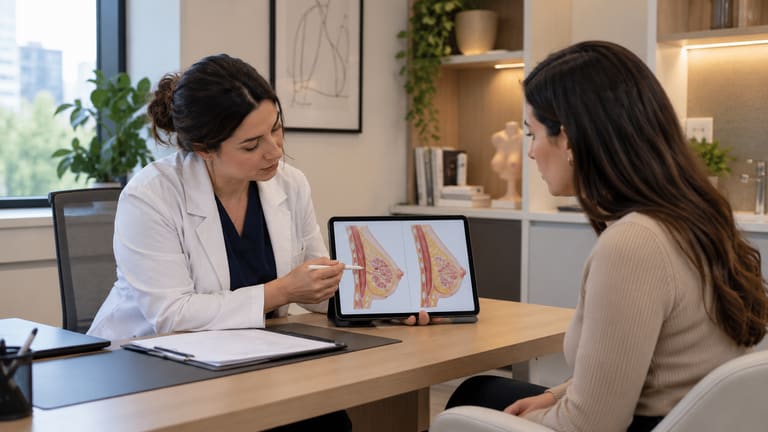
Lifting and reshaping the breasts by tightening skin and tissue; size stays the same unless you choose to add an implant.
View treatment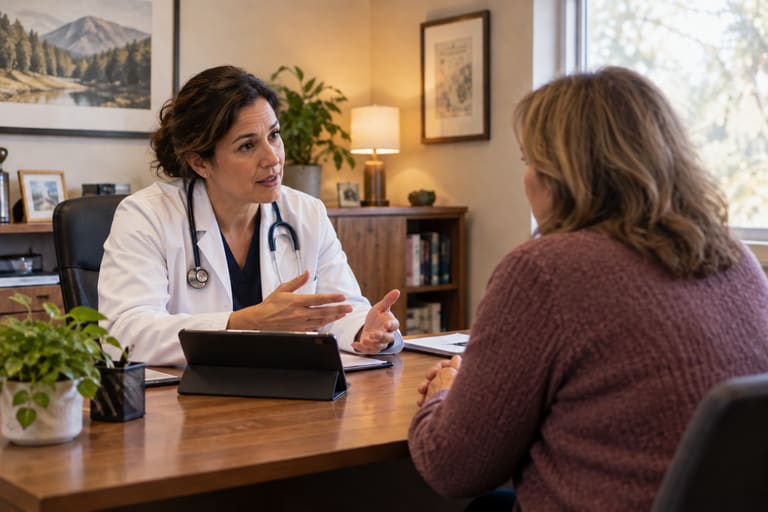
Making heavy breasts smaller to relieve neck, shoulder and back strain, with comfort first and shape close behind.
View treatment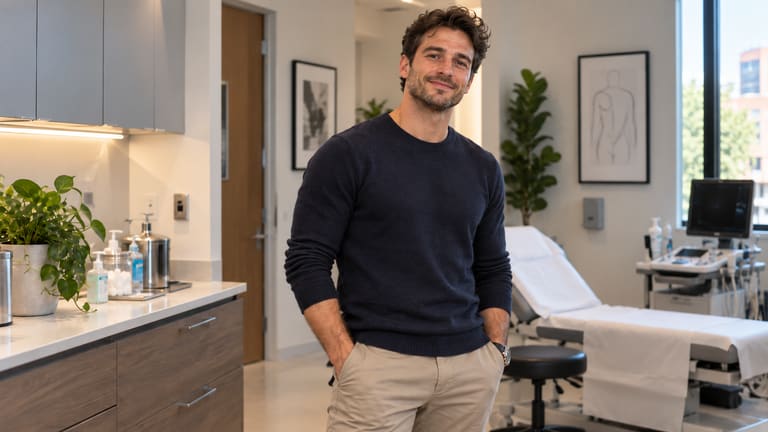
Surgery for enlarged male breasts, once gland tissue has been told apart from fat and hormonal or medication causes have been checked.
View treatmentSend your details and your coordinator will explain what comes next. You are free to stop at any point.
This page is general information, not medical advice; a treating clinician confirms your plan after assessment. ELAVIA Global coordinates care; clinical evaluation and treatment are delivered by independent, licensed partner facilities and their specialists.
ELAVIA Global coordinates international patient care. Clinical services are delivered by independently operated facilities.