
The planning step of a transplant: choosing a hairline that suits your face now and will still look right as you get older.
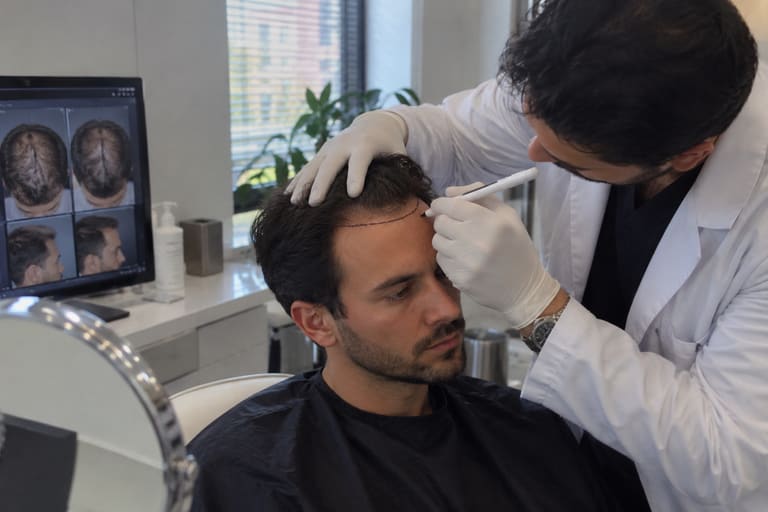
The hairline frames the face, so where it sits and how it is shaped matter as much as the number of grafts. Hairline design is when you and the surgeon agree its position, how it curves at the temples and how soft or sharp its edge should be.
A careful design takes into account the proportions of your face, your age, your hair type and background, and how your hair loss may develop. A line that looks right at 25 can seem too low or too straight at 50, and that is hard to undo.
This is general guidance. The clinician who treats you decides whether a treatment fits, after looking at your photos and medical history and, if needed, examining you in person.
You send photos from the front, both sides and above, and older photos if you have them, and explain the look you are after.
The surgeon suggests a height and shape and explains why, based on your face and how your hair loss may progress.
On the day of the procedure the line is drawn on your scalp and adjusted with you at the mirror until you both agree.
Single-hair grafts are planned for the soft front edge, with fuller grafts behind for body.
The design itself needs no recovery. It is settled before any procedure starts.
Recovery follows the technique used for the transplant, with new hair usually appearing between three and six months.
Once the hair has grown in, the hairline is reviewed and any fine-tuning is discussed.
Everyone heals at their own pace, and the instructions from your clinic always come first.
Your wishes come first, but the surgeon will advise against a line your donor hair cannot support or that may look unnatural later. You agree the final line together.
It can often be improved, for instance by softening the edge or reshaping the temples. What can be done depends on the earlier work and how much donor hair is left.
The price follows the plan your surgeon proposes after reviewing your case, mostly the size of the area and the technique. You get an itemised quote in writing before any booking, and you are not committed to go ahead.
Hairline Design is priced individually after a specialist reviews your case. You receive a written, itemised quote before anything is booked.
From your first message to care after you are home, in eight clear stages for patients travelling in.
Step 1 / 8
Share what you would like to treat, your health background and when you hope to travel, using a short form or a message.
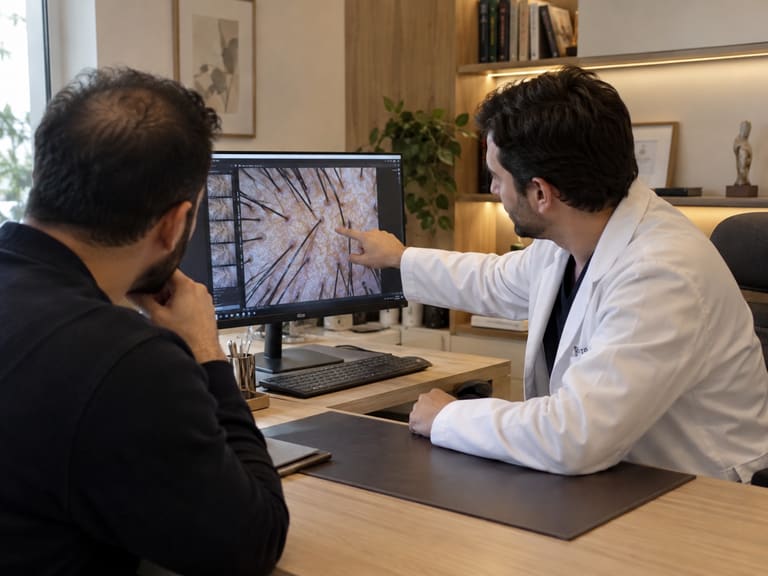
A careful look at your hair loss and donor area that sets out every option, surgical or not, before you decide anything.
View treatment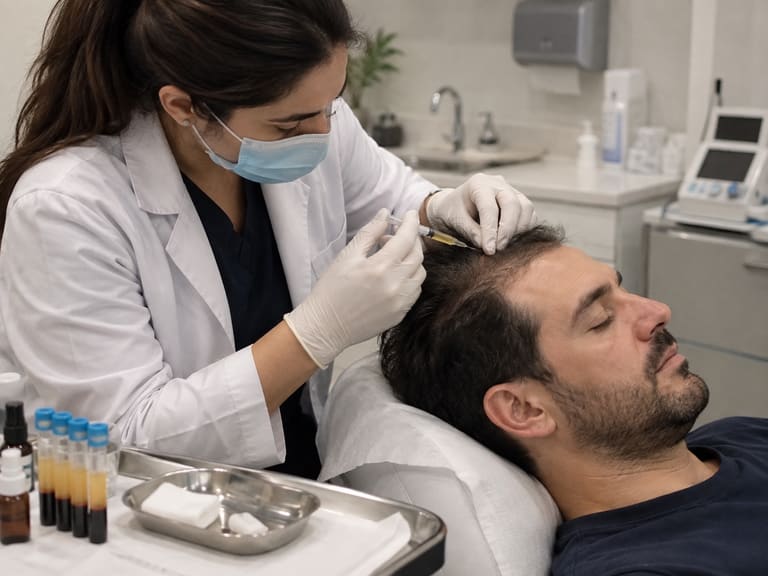
Plasma rich in platelets, prepared from your own blood and injected into the scalp, either alone or to support a transplant.
View treatment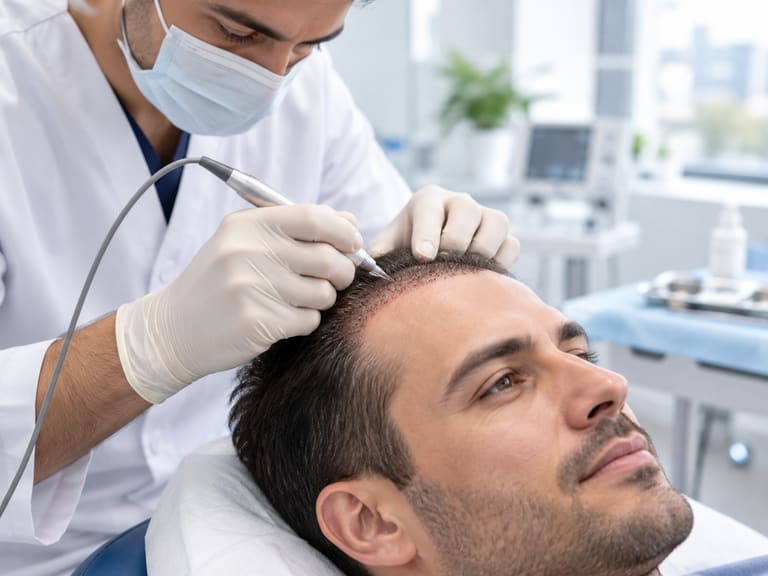
An extended DHI session with implanter pens and denser placement, for people whose donor hair and hairline design can support it.
View treatmentSend your details and your coordinator will explain what comes next. You are free to stop at any point.
This page is general information, not medical advice; a treating clinician confirms your plan after assessment. ELAVIA Global coordinates care; clinical evaluation and treatment are delivered by independent, licensed partner facilities and their specialists.
ELAVIA Global coordinates international patient care. Clinical services are delivered by independently operated facilities.