
A second nose operation to help breathing or shape, done only after the tissues have fully settled and there is enough material to work with.
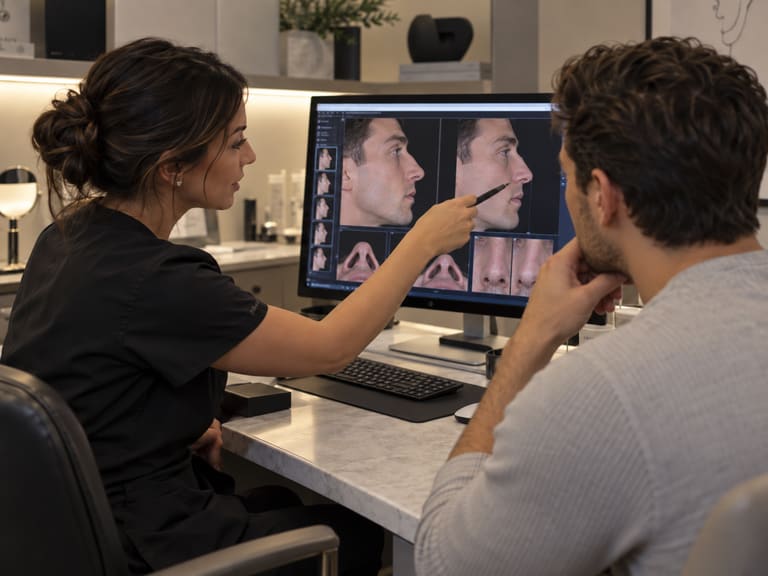
Revision rhinoplasty is another operation to put right problems with how the nose looks or works after an earlier rhinoplasty. Scar tissue and the changes made the first time usually make it more complicated.
To rebuild support, cartilage grafts are often needed, sometimes taken from the ear or a rib. Most surgeons wait at least a year after the first operation so the swelling has gone down.
Read this as a general outline. Only the surgeon who would operate can say whether the operation suits you, once they have examined you in person, gone through your medical history and seen any tests they ask for.
You send photos and your medical history, and the surgeon tells you whether the operation looks suitable and what it could realistically do for you.
The surgeon examines you, finalises the plan, takes you through the risks and arranges the pre-operative tests; only then do you sign the consent form.
Under general anaesthetic, the nose is reshaped, frequently with cartilage grafts to restore support, and a splint is put on.
Before you leave, the surgeon checks how you are healing. You go home with written aftercare instructions and remote follow-up.
You have a splint on the outside of the nose and sometimes inside it too. Breathing through the nose is difficult, and swelling and bruising around the eyes are usual.
The splint comes off. The nose looks puffy and the tip can feel firm or numb.
The bruising has mostly cleared. Avoid contact sports, strenuous exercise and glasses that sit on the bridge of the nose.
The swelling, especially at the tip, goes down slowly. It can be a year or more before the final shape shows.
Everyone heals at their own pace, and the instructions from your clinic always come first.
Normally at least 12 months, sometimes more, so the swelling has gone and the tissues have healed.
Frequently, yes, since cartilage from the nose may already have been used or removed. After examining you, the surgeon goes through the options.
That varies with the operation. Many trips are planned for one to two weeks, so the surgeon can see you and take out stitches or drains before you go. Flying too soon after surgery makes blood clots more likely, so your surgeon tells you when it is safe to fly.
It depends on the operation the surgeon advises after examining you, the nights in hospital and anything done at the same time. You get an itemised quote in writing before you book, and you are free to say no.
Revision Rhinoplasty is priced individually after a specialist reviews your case. You receive a written, itemised quote before anything is booked.
From your first message to care after you are home, in eight clear stages for patients travelling in.
Step 1 / 8
Share what you would like to treat, your health background and when you hope to travel, using a short form or a message.
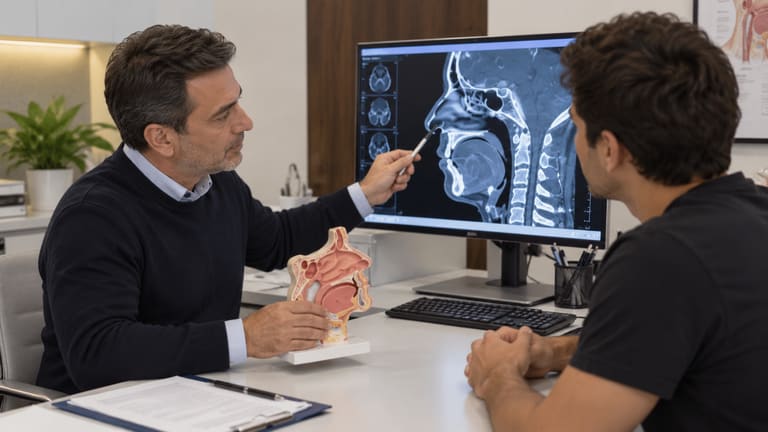
Correcting a bent septum so air flows better through the nose; it changes the look only if a rhinoplasty is done at the same time.
View treatment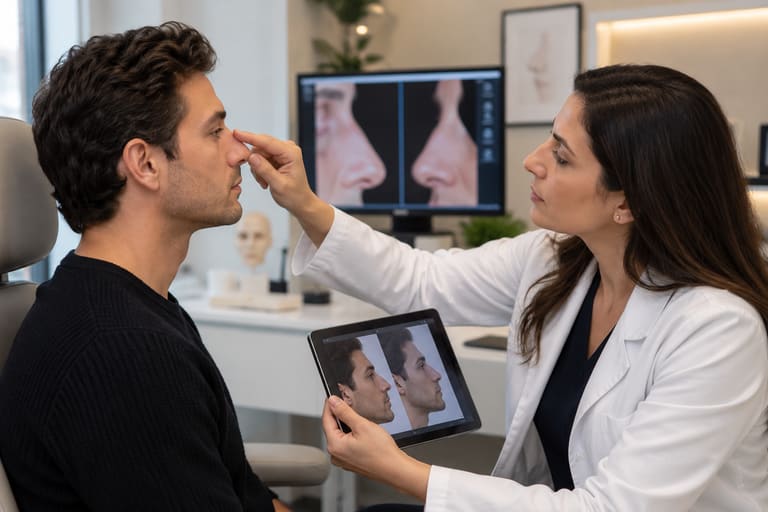
Bringing a small or set-back chin forward with an implant or bone surgery, after your bite and profile have been examined together.
View treatment
Surgery to change the shape of the body, planned after examination; how many stages and how long recovery takes depend on the operation.
View treatmentSend your details and your coordinator will explain what comes next. You are free to stop at any point.
This page is general information, not medical advice; a treating clinician confirms your plan after assessment. ELAVIA Global coordinates care; clinical evaluation and treatment are delivered by independent, licensed partner facilities and their specialists.
ELAVIA Global coordinates international patient care. Clinical services are delivered by independently operated facilities.