
Tightening skin all the way around the lower body after large weight loss, considered only when your health and a staged plan make a long operation sensible.
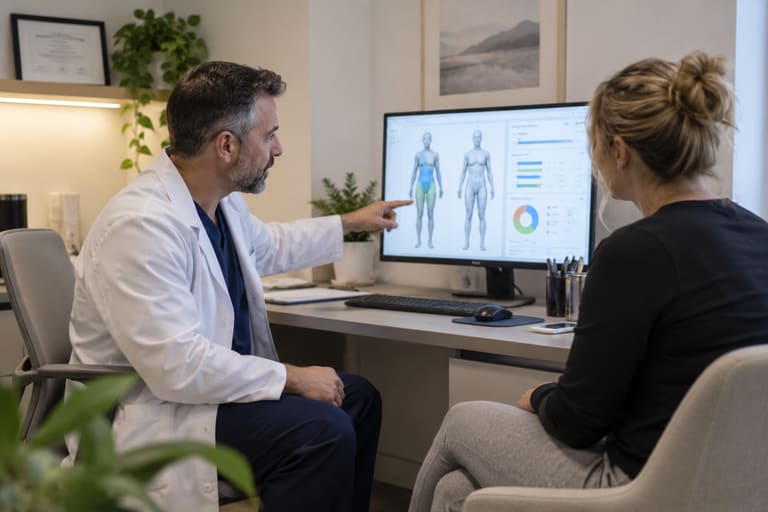
A lower body lift takes away loose skin right round the lower torso: the tummy, the sides, the lower back and, in some cases, the buttocks and outer thighs. The resulting scar circles the body.
It is meant for people who have lost a great deal of weight, frequently after weight-loss surgery, and are left with overhanging skin that chafes, causes rashes or makes clothes hard to wear. It is a big operation, and recovery takes longer.
Read this as a general outline. Only the surgeon who would operate can say whether the operation suits you, once they have examined you in person, gone through your medical history and seen any tests they ask for.
You send photos and your medical history, and the surgeon tells you whether the operation looks suitable and what it could realistically do for you.
The surgeon examines you, finalises the plan, takes you through the risks and arranges the pre-operative tests; only then do you sign the consent form.
Under general anaesthetic, the loose skin around the torso is removed in one stage or more, normally followed by several nights in hospital.
Before you leave, the surgeon checks how you are healing. You go home with written aftercare instructions and remote follow-up.
Expect at least one night in hospital. Medication keeps pain under control, you are up and walking early to lower the risk of clots, and drains may be in place.
Drains and stitches come out when healing allows. You wear a compression garment and steer clear of lifting and hard exertion.
With the surgeon’s go-ahead, most people ease back into exercise. There is still swelling, and it can come and go.
The swelling goes down and scars gradually flatten and fade. The final shape is normally assessed after several months.
Everyone heals at their own pace, and the instructions from your clinic always come first.
Generally once your weight has stayed the same for six to twelve months, which is often 18 months or longer after the bariatric operation.
Sometimes. With bigger plans the surgeon may split the work into stages, keeping each operation shorter and safer.
That varies with the operation. Many trips are planned for one to two weeks, so the surgeon can see you and take out stitches or drains before you go. Flying too soon after surgery makes blood clots more likely, so your surgeon tells you when it is safe to fly.
It depends on the operation the surgeon advises after examining you, the nights in hospital and anything done at the same time. You get an itemised quote in writing before you book, and you are free to say no.
Body Lift is priced individually after a specialist reviews your case. You receive a written, itemised quote before anything is booked.
From your first message to care after you are home, in eight clear stages for patients travelling in.
Step 1 / 8
Share what you would like to treat, your health background and when you hope to travel, using a short form or a message.
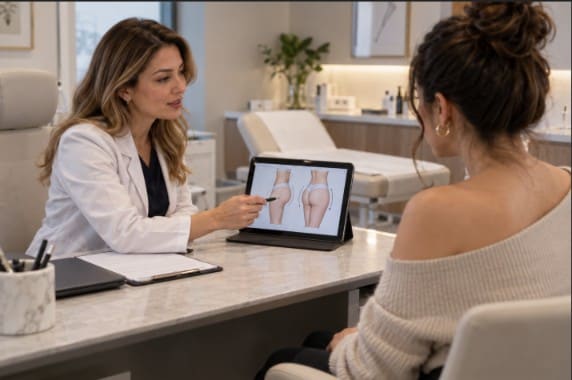
Adding shape and volume to the buttocks with your own fat or implants, decided after a review of your anatomy and safety, not from a photo online.
View treatment
Intimate surgery, talked through in private, where comfort and function count as much as appearance.
View treatment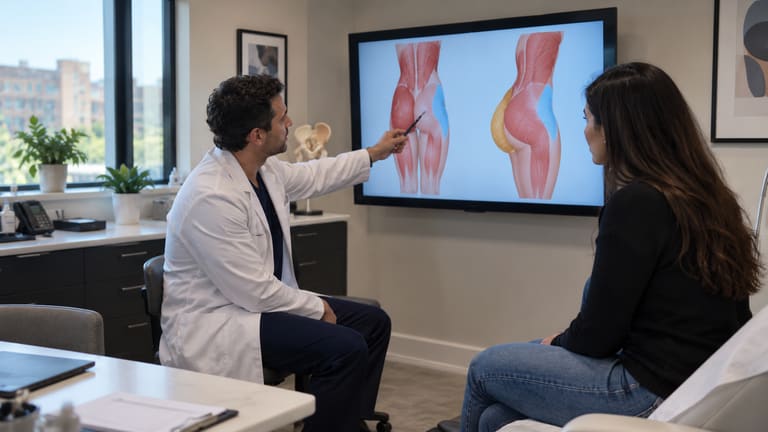
Removing fat from chosen areas once the surgeon has checked your skin and a safe amount; it shapes the body, it is not a way to lose weight.
View treatmentSend your details and your coordinator will explain what comes next. You are free to stop at any point.
This page is general information, not medical advice; a treating clinician confirms your plan after assessment. ELAVIA Global coordinates care; clinical evaluation and treatment are delivered by independent, licensed partner facilities and their specialists.
ELAVIA Global coordinates international patient care. Clinical services are delivered by independently operated facilities.