
Hyaluronic acid or other suitable fillers to restore volume, planned after an examination.
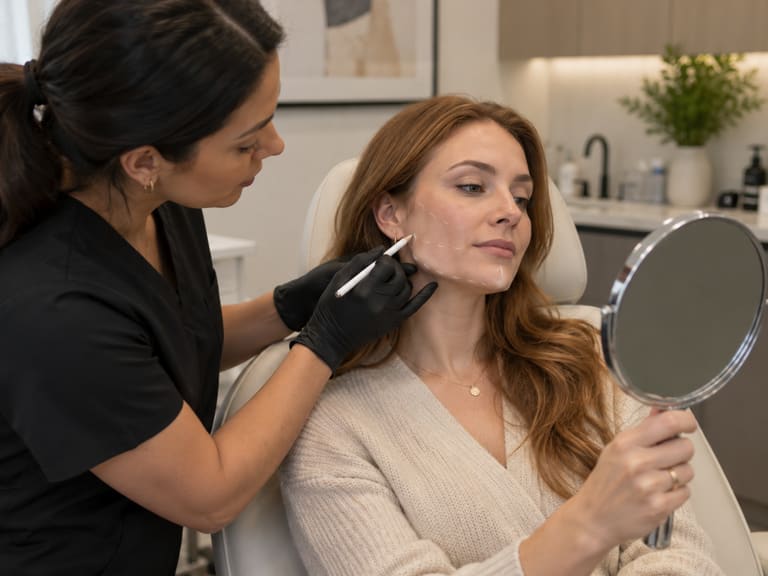
Dermal fillers are gels placed under the skin to replace lost volume, prop up areas that have flattened with age or sharpen an outline. They are often used in the cheeks, the temples, hollows under the eyes, the lines running from nose to mouth, the chin and the jaw.
Most clinics choose hyaluronic-acid fillers. Hyaluronic acid is found naturally in the body, the filler fades slowly, and it can usually be dissolved with an enzyme, hyaluronidase, if needed. Permanent fillers are generally avoided, as their complications can be hard to treat.
Take this as a general guide. Whether the treatment suits you is for the clinician to decide, once they have seen you in person and checked your medical history and the medicines you take.
You send photos and a few lines about what bothers you. The clinician tells you which options might help and which probably would not.
The clinician examines your face and skin, goes over your medical history and explains what to expect, where the limits are and what the risks are, before you agree to anything.
The skin is cleaned, then the clinician places the filler with a fine needle or a blunt-tipped cannula, checking balance and symmetry across your face as they work.
You get written aftercare advice and someone to contact with questions. Depending on how long you stay, the review happens in person or by photo.
Do not touch or rub the treated area unless you are told to, and leave out make-up, alcohol, hard exercise, saunas and hot baths.
Swelling, tenderness and bruising normally go within a week. The area may feel firm or a little lumpy while the filler beds in.
Once the swelling has gone you can judge the result, and any small adjustment is made then.
Your body slowly breaks the filler down. How quickly depends on the product, the area and on you.
Everyone heals at their own pace, and the instructions from your clinic always come first.
Hyaluronic-acid filler can normally be dissolved with hyaluronidase, though it may take more than one session. Other kinds of filler cannot be removed this way.
Usually six to eighteen, depending on the product, where it was placed and how fast your body breaks it down.
Many people fly within a day or two, although swelling can rise a little in the air. Staying close by for the first day or two lets the clinic see you quickly if something goes wrong.
Most injections and skin treatments fit into one appointment, but staying close by for a day or two afterwards means the clinic can see you if anything unexpected happens. Your coordinator confirms the timings and explains how the follow-up will work once you are home.
It follows the plan the clinician suggests after seeing you: which areas are treated, how much product is used and how many sessions are needed. You get a written quote before you book, and you are free to say no.
Dermal Fillers is priced individually after a specialist reviews your case. You receive a written, itemised quote before anything is booked.
From your first message to care after you are home, in eight clear stages for patients travelling in.
Step 1 / 8
Share what you would like to treat, your health background and when you hope to travel, using a short form or a message.
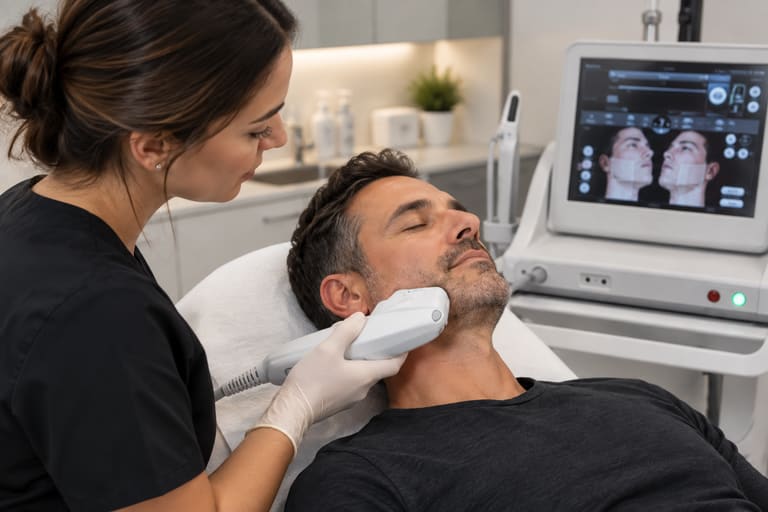
A conversation about lifting without surgery; it can help, but it is not a guaranteed alternative to a facelift.
View treatment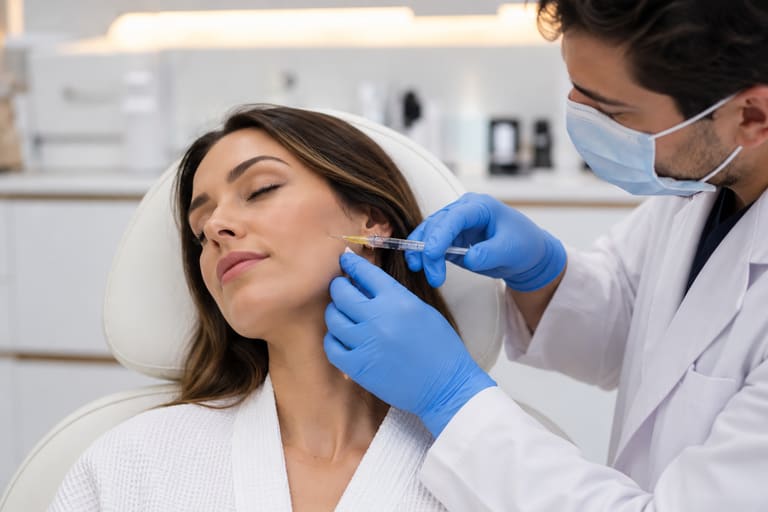
Platelet-rich plasma or stem-cell treatments, considered as support for the skin or hair.
View treatment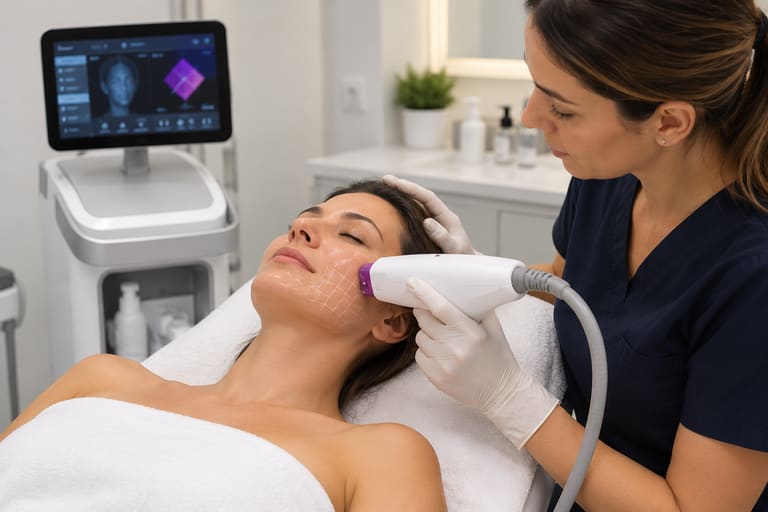
Radiofrequency energy that warms the deeper skin to encourage gentle firming over time; the change is gradual and modest, not a facelift.
View treatmentSend your details and your coordinator will explain what comes next. You are free to stop at any point.
This page is general information, not medical advice; a treating clinician confirms your plan after assessment. ELAVIA Global coordinates care; clinical evaluation and treatment are delivered by independent, licensed partner facilities and their specialists.
ELAVIA Global coordinates international patient care. Clinical services are delivered by independently operated facilities.