
Grafts set one at a time with an implanter pen, so the angle and direction of every new hair can be closely controlled.
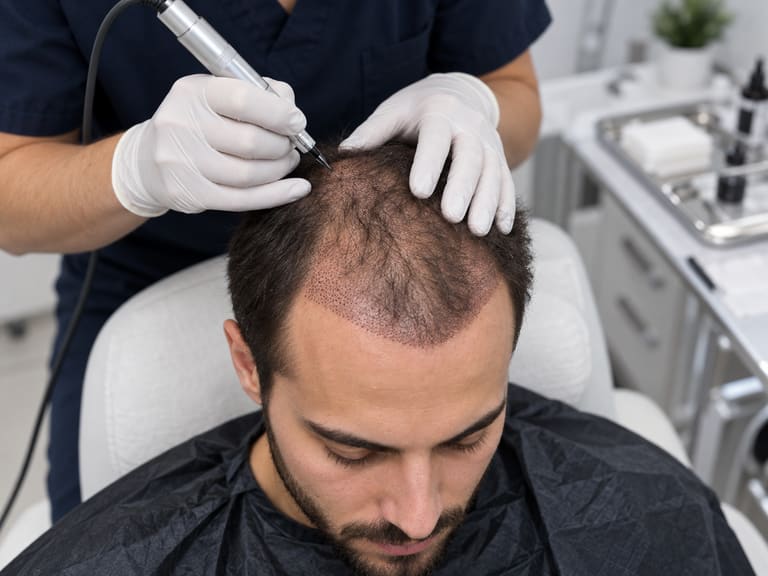
In Direct Hair Implantation (DHI), follicles are removed individually from the donor area and implanted with a slim pen-shaped tool that makes the tiny opening and places the graft at the same moment.
Since every graft enters at a set angle and depth, DHI is often chosen for hairlines and for adding density among existing hairs. Over very large areas it can be slower than other methods, so your surgeon compares it with FUE for each case.
This is general guidance. The clinician who treats you decides whether a treatment fits, after looking at your photos and medical history and, if needed, examining you in person.
You share photos of the areas that concern you and of your donor hair, and your coordinator passes on the surgeon’s first view and an outline plan.
The surgeon examines your scalp, confirms the graft count and agrees the hairline with you.
With local anaesthetic, follicles are removed one by one from the donor area using a fine punch.
Each graft is loaded into an implanter and placed straight into the scalp at the planned angle and depth.
You come back the following day so the team can look at the grafts and show you how to wash and look after your scalp.
The scalp may feel tight, the forehead or eyes can swell a little and tiny scabs form around the grafts. You sleep with your head propped up, and the clinic shows you the first gentle wash, normally the morning after.
With careful washing the scabs loosen and fall away, and any redness slowly settles. Many people are back at a desk by now; physical work may need a little longer.
Most of the transplanted hairs fall out. This is normal: the follicles remain under the skin and rest for a while before growing again.
New hairs begin to come through, usually fine and patchy to start with, then thickening over the following months.
The outcome is usually judged at about a year. The crown often takes longer to fill in than the hairline.
Everyone heals at their own pace, and the instructions from your clinic always come first.
Grafts are taken out the same way in both. The difference is placement: DHI uses an implanter that opens the site and inserts the graft together, while FUE opens all the sites first and places the grafts afterwards.
Most people notice the local anaesthetic injections most. Afterwards any discomfort is usually mild and eased with the medicine the clinic gives you.
Plan on about three nights for most graft procedures: one for arrival and checks, one for the procedure, and a check-up with the first wash before your flight. Your coordinator sets the final schedule once the clinic confirms the date.
The price follows the plan your surgeon proposes after reviewing your case, mostly the size of the area and the technique. You get an itemised quote in writing before any booking, and you are not committed to go ahead.
Pick your country. Flights and extra nights are added in.
At home in Canada
Hair transplant
No reliable public price for this country
Istanbul trip total
Hair transplant
C$4,150 – C$7,900
Usually included
Estimates compiled by ELAVIA Global from publicly available 2026 clinic price lists, flight and hotel data. Rates: ECB, 2026-10-30.
Estimates for planning only, not a quote. Your price is confirmed in a written, itemised quote after a specialist reviews your case.
From your first message to care after you are home, in eight clear stages for patients travelling in.
Step 1 / 8
Share what you would like to treat, your health background and when you hope to travel, using a short form or a message.
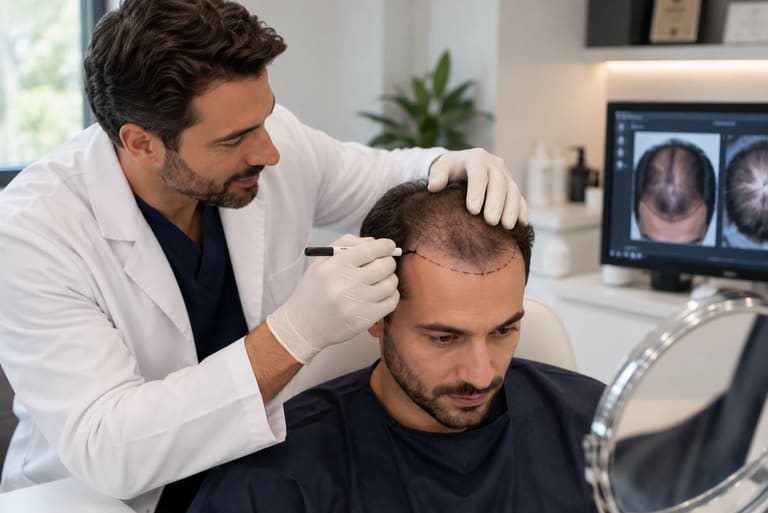
Follicles moved one by one from the donor area to thinning areas; an adaptable technique often used when a large area needs covering.
View treatment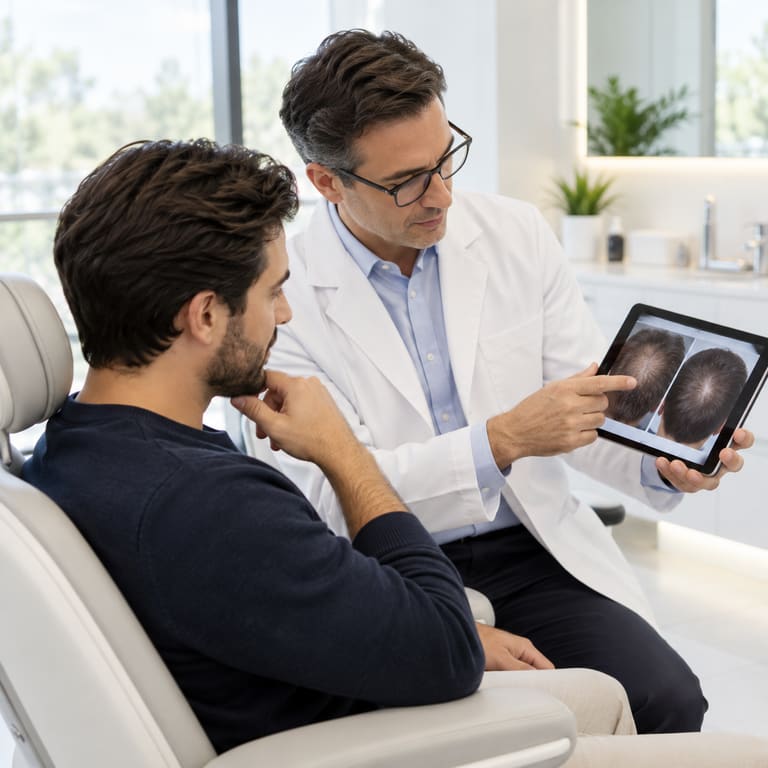
A transplant that leaves most of your hair at its current length, for people who want the procedure to be less noticeable while they heal.
View treatment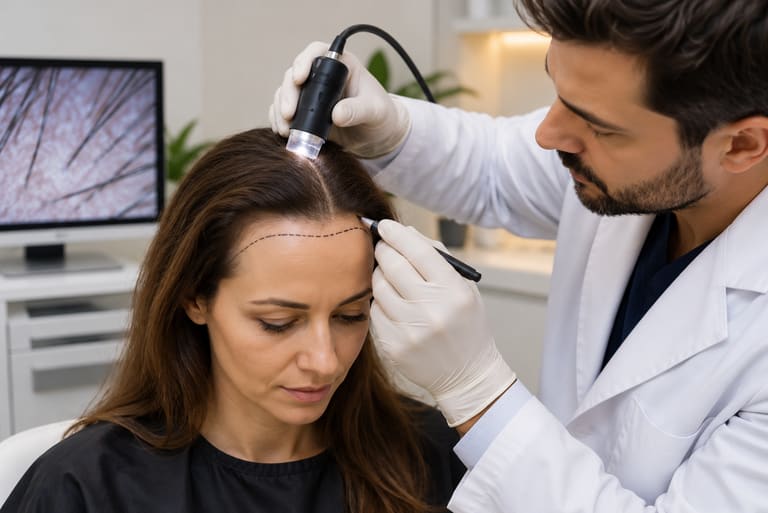
Hair restoration for women that begins by finding out why the hair is thinning, with a plan that leaves your existing hair as untouched as possible.
View treatmentSend your details and your coordinator will explain what comes next. You are free to stop at any point.
This page is general information, not medical advice; a treating clinician confirms your plan after assessment. ELAVIA Global coordinates care; clinical evaluation and treatment are delivered by independent, licensed partner facilities and their specialists.
ELAVIA Global coordinates international patient care. Clinical services are delivered by independently operated facilities.