
Hair restoration for women that begins by finding out why the hair is thinning, with a plan that leaves your existing hair as untouched as possible.
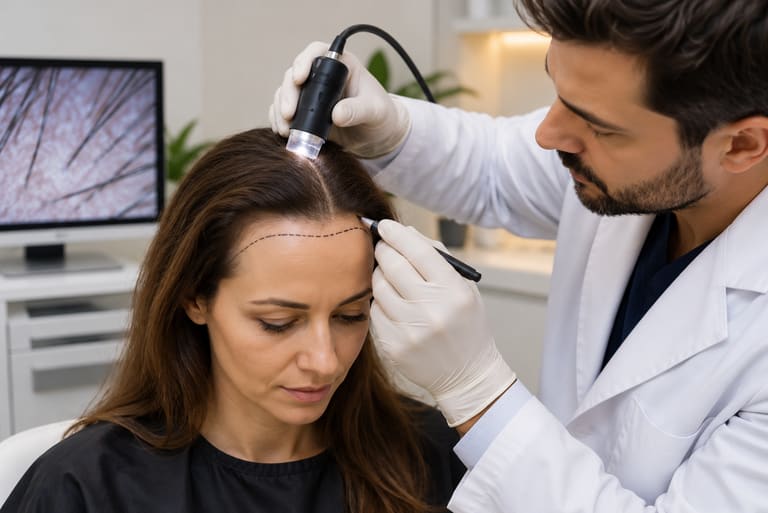
Women tend to lose hair differently from men. Thinning is often spread across the top of the head rather than in clear patches, and it can be connected to hormones, low iron, thyroid problems, stress, medicines or scalp conditions. That is why the cause is looked into before surgery is even discussed.
A transplant can help in certain situations, such as a high or uneven hairline, a settled patch of thinning, or loss caused by tight hairstyles or earlier surgery. The plan then aims to protect the hair you already have, often with unshaven or partly trimmed techniques.
For many women with all-over thinning, medical or non-surgical care is the better choice. Blood tests or a dermatologist’s opinion may come first. This is general guidance. The clinician who treats you decides whether a treatment fits, after looking at your photos and medical history and, if needed, examining you in person.
You send photos and a short account of your hair loss, including health conditions, pregnancies and any medicines you take.
Before confirming that a transplant makes sense, the surgeon may ask for blood tests or a dermatologist’s review.
If surgery is right for you, the hairline or area to treat is designed with you, keeping your usual hairstyle as intact as possible.
Under local anaesthetic, follicles are taken, often from small hidden donor bands, and placed between the hairs you already have.
You receive written aftercare advice and remote check-ins at set points over the next year.
The scalp may feel tight, the forehead or eyes can swell a little and tiny scabs form around the grafts. You sleep with your head propped up, and the clinic shows you the first gentle wash, normally the morning after.
With careful washing the scabs loosen and fall away, and any redness slowly settles. Many people are back at a desk by now; physical work may need a little longer.
Most of the transplanted hairs fall out. This is normal: the follicles remain under the skin and rest for a while before growing again.
New hairs begin to come through, usually fine and patchy to start with, then thickening over the following months.
The outcome is usually judged at about a year. The crown often takes longer to fill in than the hairline.
Everyone heals at their own pace, and the instructions from your clinic always come first.
Usually not. Most plans for women use unshaven or partly trimmed methods so longer hair hides the donor area.
Often not. The first job is to find and treat the cause; surgery is considered once the loss is settled and limited to one area.
Plan on about three nights for most graft procedures: one for arrival and checks, one for the procedure, and a check-up with the first wash before your flight. Your coordinator sets the final schedule once the clinic confirms the date.
The price follows the plan your surgeon proposes after reviewing your case, mostly the size of the area and the technique. You get an itemised quote in writing before any booking, and you are not committed to go ahead.
Pick your country. Flights and extra nights are added in.
At home in Canada
Hair transplant
No reliable public price for this country
Istanbul trip total
Hair transplant
C$4,150 – C$7,900
Usually included
Estimates compiled by ELAVIA Global from publicly available 2026 clinic price lists, flight and hotel data. Rates: ECB, 2026-10-30.
Estimates for planning only, not a quote. Your price is confirmed in a written, itemised quote after a specialist reviews your case.
From your first message to care after you are home, in eight clear stages for patients travelling in.
Step 1 / 8
Share what you would like to treat, your health background and when you hope to travel, using a short form or a message.
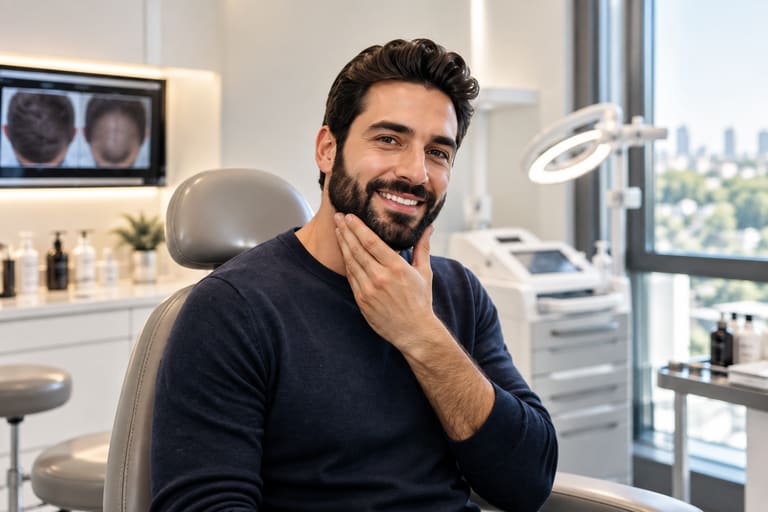
Follicles from the scalp used to fill thin patches or sharpen the outline of a beard, designed around the shape of your face and how your hair grows.
View treatment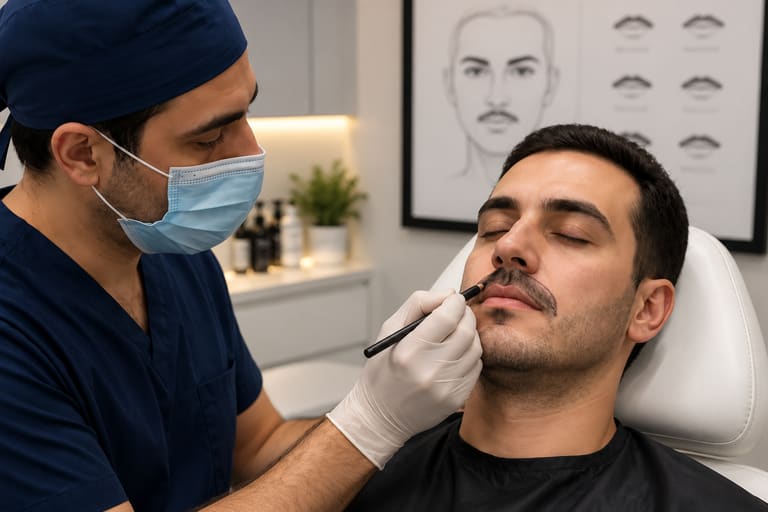
A small, precise transplant to fill gaps in a moustache or give it a new shape, with each graft set at the angle facial hair needs.
View treatment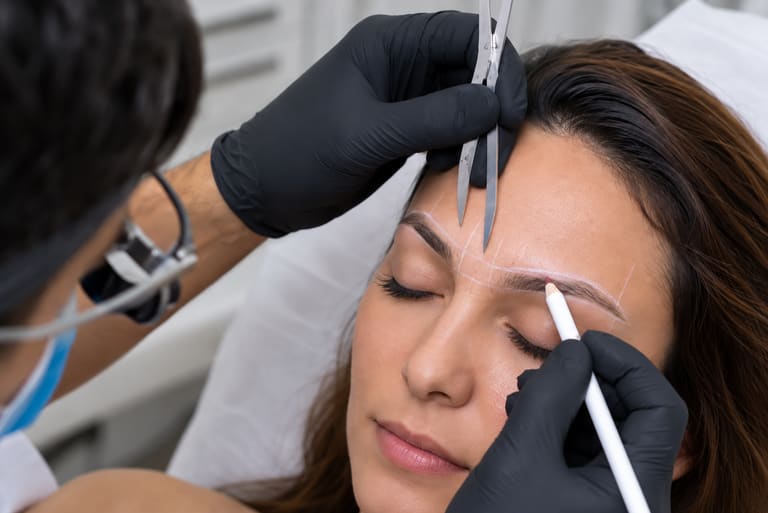
Single-hair grafts used to rebuild or reshape the eyebrows, laid almost flat to follow the way brow hair naturally grows.
View treatmentSend your details and your coordinator will explain what comes next. You are free to stop at any point.
This page is general information, not medical advice; a treating clinician confirms your plan after assessment. ELAVIA Global coordinates care; clinical evaluation and treatment are delivered by independent, licensed partner facilities and their specialists.
ELAVIA Global coordinates international patient care. Clinical services are delivered by independently operated facilities.