
Operations on the face, planned with a surgeon once your photos have been reviewed and you have been seen in person.
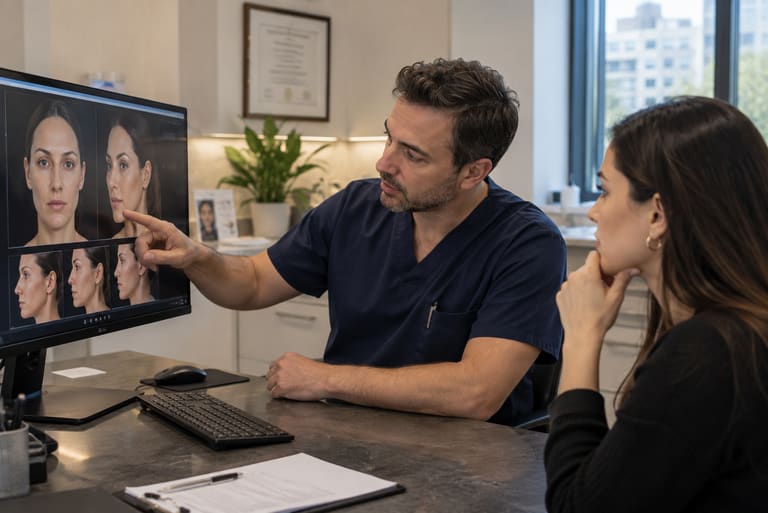
Facial surgery takes in the facelift, neck lift, eyelid surgery, brow lift, chin implants, ear correction and buccal fat removal, each aimed at a different area of the face.
Good planning considers the face as a whole: the quality of the skin, the bone beneath and how each feature sits next to the others. A smaller operation, or a treatment without surgery, can sometimes look more natural than a bigger one.
Read this as a general outline. Only the surgeon who would operate can say whether the operation suits you, once they have examined you in person, gone through your medical history and seen any tests they ask for.
You send photos and your medical history, and the surgeon tells you whether the operation looks suitable and what it could realistically do for you.
The surgeon examines you, finalises the plan, takes you through the risks and arranges the pre-operative tests; only then do you sign the consent form.
Depending on the procedure, it is done under general anaesthetic or under local anaesthetic with sedation.
Before you leave, the surgeon checks how you are healing. You go home with written aftercare instructions and remote follow-up.
Swelling and bruising reach their worst. Sleep with your head propped up, use cold packs as you were shown and avoid bending down or lifting anything heavy.
Stitches normally come out and a good part of the bruising fades. Some people are happy to go out with a little make-up.
Most of the visible swelling goes, though some tightness or numbness may linger. You build exercise back up step by step.
The last of the swelling disappears and scars soften. The final result is usually judged after several months.
Everyone heals at their own pace, and the instructions from your clinic always come first.
That depends on what bothers you and what is causing it. The surgeon looks at your whole face and may propose a different, or smaller, procedure than you had in mind.
Plenty of people are happy going out after around two weeks, although it depends on the operation and on how you heal.
That varies with the operation. Many trips are planned for one to two weeks, so the surgeon can see you and take out stitches or drains before you go. Flying too soon after surgery makes blood clots more likely, so your surgeon tells you when it is safe to fly.
It depends on the operation the surgeon advises after examining you, the nights in hospital and anything done at the same time. You get an itemised quote in writing before you book, and you are free to say no.
Facial Surgery is priced individually after a specialist reviews your case. You receive a written, itemised quote before anything is booked.
From your first message to care after you are home, in eight clear stages for patients travelling in.
Step 1 / 8
Share what you would like to treat, your health background and when you hope to travel, using a short form or a message.
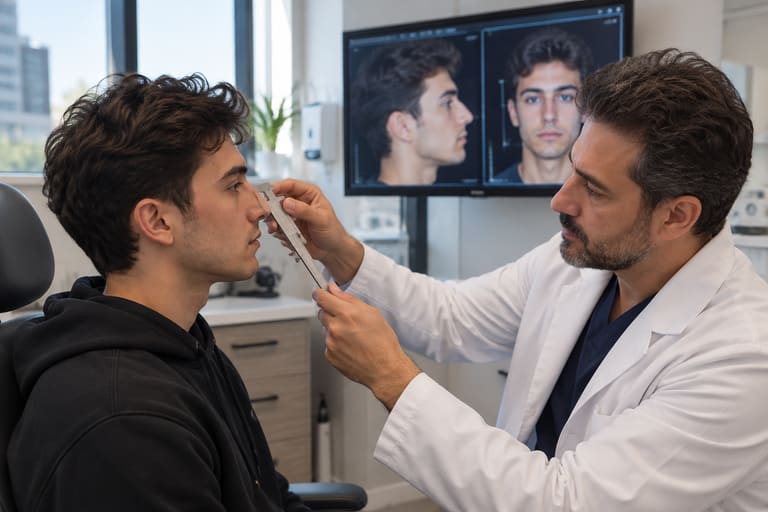
Surgery on the nose, planned after an examination, with how you breathe and how you would like it to look discussed side by side.
View treatment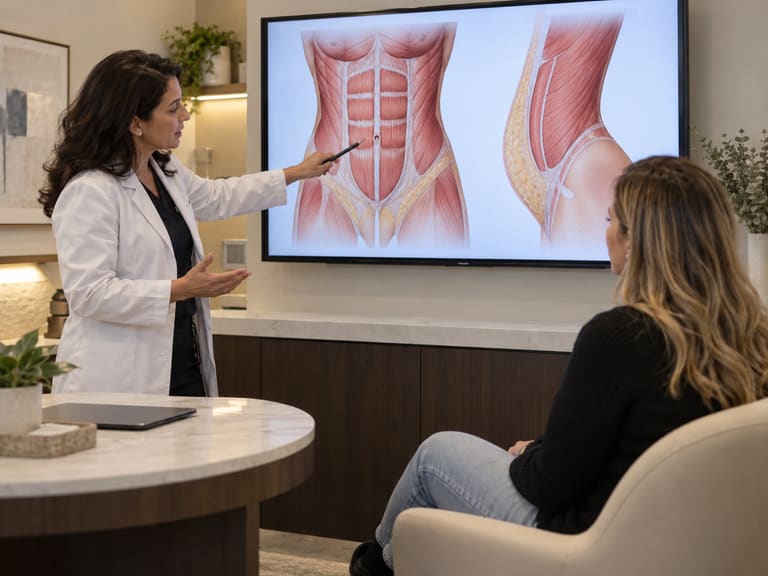
Removing loose skin from the abdomen and, if needed, repairing the muscles, often after pregnancy or a big change in weight.
View treatment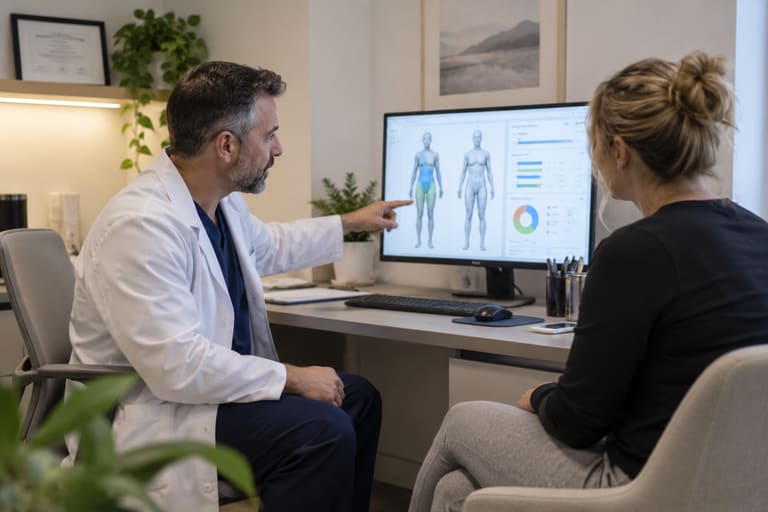
Tightening skin all the way around the lower body after large weight loss, considered only when your health and a staged plan make a long operation sensible.
View treatmentSend your details and your coordinator will explain what comes next. You are free to stop at any point.
This page is general information, not medical advice; a treating clinician confirms your plan after assessment. ELAVIA Global coordinates care; clinical evaluation and treatment are delivered by independent, licensed partner facilities and their specialists.
ELAVIA Global coordinates international patient care. Clinical services are delivered by independently operated facilities.