
Laser correction of short sight, long sight or astigmatism, considered once your cornea has been mapped and your eyes fully examined.
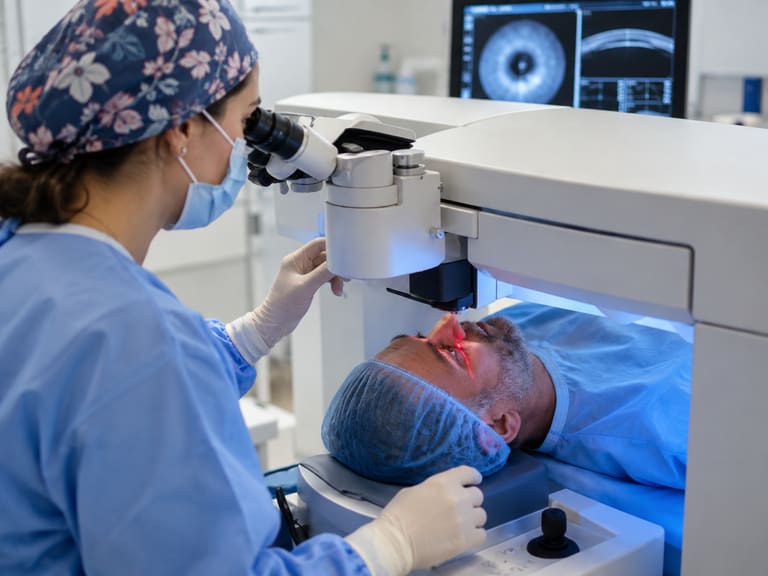
LASIK is laser surgery that reshapes the cornea, the clear window at the front of the eye, to correct short sight, long sight and astigmatism. One laser makes a thin flap in the surface of the cornea; the flap is folded back, a second laser reshapes the tissue beneath, and the flap is laid down again.
Whether LASIK suits you depends on how thick and how regular your cornea is, how strong your prescription is and how healthy your eyes are in general. The measurements sometimes show that surface laser, SMILE or lens surgery would be safer, or that it is wiser not to operate at all.
Use this as a general outline. The eye surgeon decides whether a procedure suits you only after a complete eye examination and precise measurements at the clinic.
You send your current glasses or contact-lens prescription, any earlier eye reports and your general medical history, and the team tells you whether a full assessment makes sense.
In Istanbul the eye surgeon examines both eyes and takes precise measurements. Drops that enlarge the pupils can blur your sight for a few hours, so do not plan to drive afterwards.
With the eye numbed by drops, a small holder keeps the lids apart. The flap is made and the cornea reshaped in a few minutes per eye while you look at a light.
Your eye is checked after the procedure, normally the following day, before you fly. Later checks take place with an eye doctor at home, using the reports you are given.
Your sight is blurred, and your eyes may water, sting or feel gritty. Rest at the hotel with your eyes shut as much as you can.
The eye surgeon checks the flap and your vision. Many people see well enough for everyday tasks, though sight can come and go a little.
Use the drops you were given, do not rub your eyes, wear the shields at night as told, and stay away from swimming, eye make-up and dusty places for as long as the clinic says.
Vision generally settles, and dryness and glare at night usually improve.
Everyone heals at their own pace, and the instructions from your clinic always come first.
The drops numb the eye, so most people feel pressure rather than pain. For a few hours afterwards the eyes may feel sore or gritty.
Many people manage most things without glasses afterwards, but that cannot be promised, and reading glasses are normally still needed as you get older.
Generally, yes. Lenses alter the shape of the cornea for a while, which can throw off the measurements. The clinic tells you how long to go without them, often about a week for soft lenses and longer for rigid ones.
That varies with the procedure. Most people allow for the assessment, the day of treatment and at least one check before they fly. Your coordinator confirms the timetable once the clinic has examined you.
It depends on the procedure the eye surgeon advises after the examination, the technology or lens used and whether one eye or both are treated. You get a written quote before you book, and you are free to say no.
LASIK is priced individually after a specialist reviews your case. You receive a written, itemised quote before anything is booked.
From your first message to care after you are home, in eight clear stages for patients travelling in.
Step 1 / 8
Share what you would like to treat, your health background and when you hope to travel, using a short form or a message.
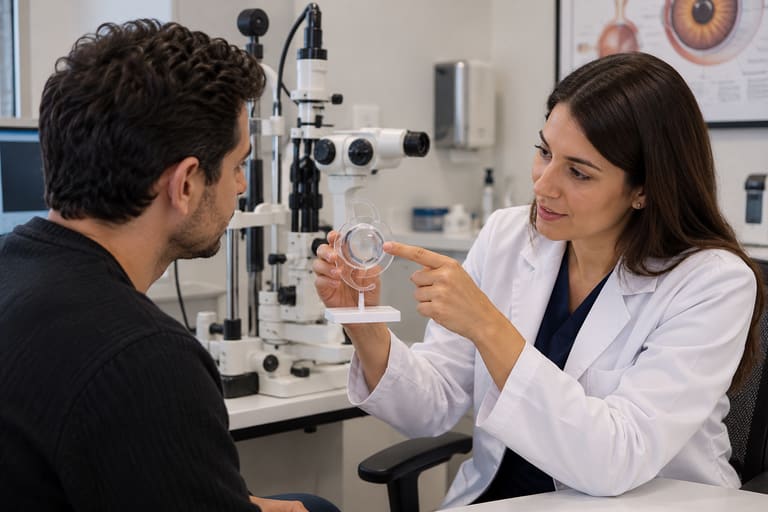
Replacing a cloudy or ageing natural lens with an artificial one, decided after a complete eye examination.
View treatment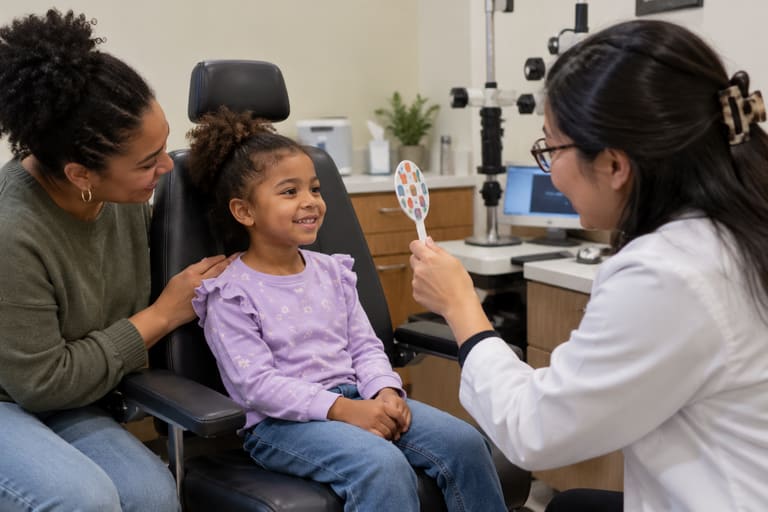
Surgery to straighten misaligned eyes, considered after a specialist has assessed eye movement and how the eyes work together.
View treatment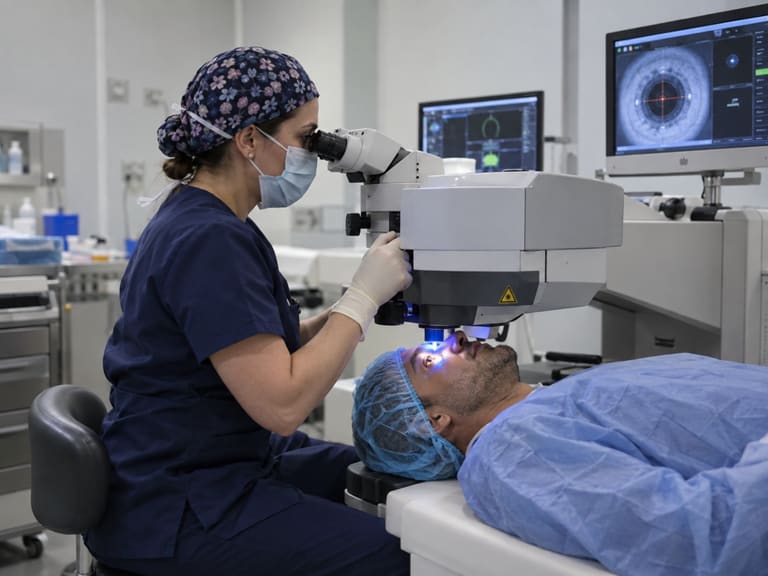
A treatment to strengthen a weakening cornea in keratoconus or ectasia, considered once the cornea has been mapped.
View treatmentSend your details and your coordinator will explain what comes next. You are free to stop at any point.
This page is general information, not medical advice; a treating clinician confirms your plan after assessment. ELAVIA Global coordinates care; clinical evaluation and treatment are delivered by independent, licensed partner facilities and their specialists.
ELAVIA Global coordinates international patient care. Clinical services are delivered by independently operated facilities.