
Surgery to straighten misaligned eyes, considered after a specialist has assessed eye movement and how the eyes work together.

Strabismus means the eyes do not point the same way: one may turn inwards, outwards, up or down. The operation changes the position or tension of the small muscles on the outside of the eye so the two eyes line up better. The eye stays in its socket throughout.
What it can achieve depends on the person. It may straighten the eyes and their appearance, cut down double vision or help the eyes work as a pair. It does not replace glasses, and in adults it may not bring back full depth perception. Glasses, prisms or injections are sometimes tried first.
Use this as a general outline. The eye surgeon decides whether a procedure suits you only after a complete eye examination and precise measurements at the clinic.
You send your current glasses or contact-lens prescription, any earlier eye reports and your general medical history, and the team tells you whether a full assessment makes sense.
In Istanbul the eye surgeon examines both eyes and takes precise measurements. Drops that enlarge the pupils can blur your sight for a few hours, so do not plan to drive afterwards.
Under anaesthetic, the surgeon reaches the eye muscles through the thin layer covering the white of the eye and moves, tightens or loosens them. The stitches generally dissolve.
Your eye is checked after the procedure, normally the following day, before you fly. Later checks take place with an eye doctor at home, using the reports you are given.
The eye is red, sore and scratchy, and sight may be blurred. Double vision can come for a while as the brain adapts.
Use the drops you were given and avoid swimming, eye make-up and rubbing the eye. Most adults are back at a desk within about a week.
The redness fades and the eyes settle into position. The surgeon judges the result once healing is complete.
Everyone heals at their own pace, and the instructions from your clinic always come first.
No. It can also reduce double vision and, in some people, help the eyes work together. Whether that is realistic for you is assessed beforehand.
Some people do. The eyes do not always respond exactly as planned, so a further procedure is sometimes required.
Yes. It is carried out in adults as well as children, and the aims and likely benefits are discussed for your own situation.
That varies with the procedure. Most people allow for the assessment, the day of treatment and at least one check before they fly. Your coordinator confirms the timetable once the clinic has examined you.
It depends on the procedure the eye surgeon advises after the examination, the technology or lens used and whether one eye or both are treated. You get a written quote before you book, and you are free to say no.
Strabismus Surgery is priced individually after a specialist reviews your case. You receive a written, itemised quote before anything is booked.
From your first message to care after you are home, in eight clear stages for patients travelling in.
Step 1 / 8
Share what you would like to treat, your health background and when you hope to travel, using a short form or a message.
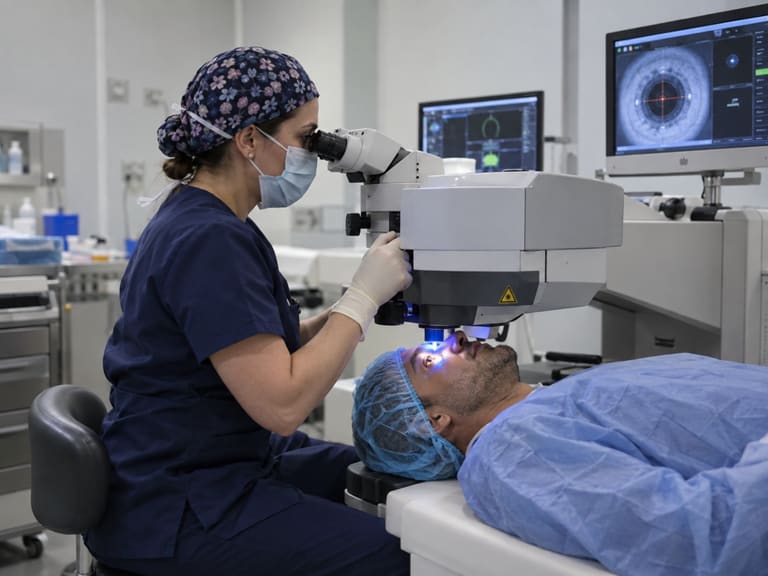
A treatment to strengthen a weakening cornea in keratoconus or ectasia, considered once the cornea has been mapped.
View treatment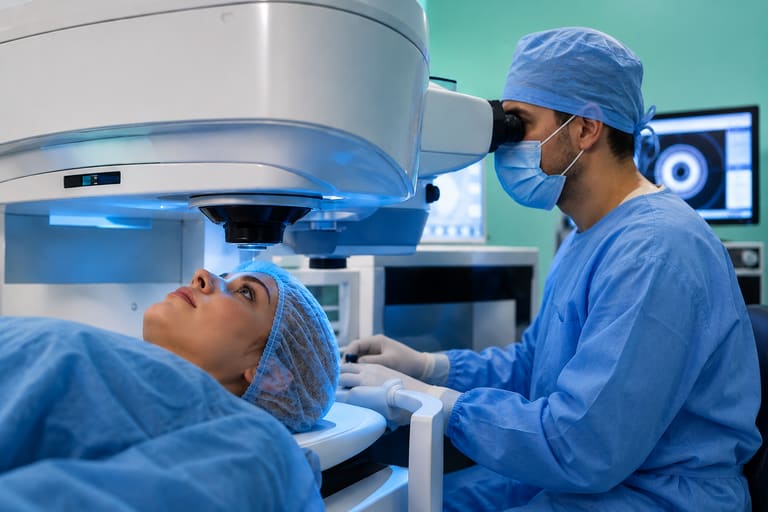
A keyhole laser technique for some cases of short sight and astigmatism, chosen from detailed measurements rather than your glasses prescription alone.
View treatment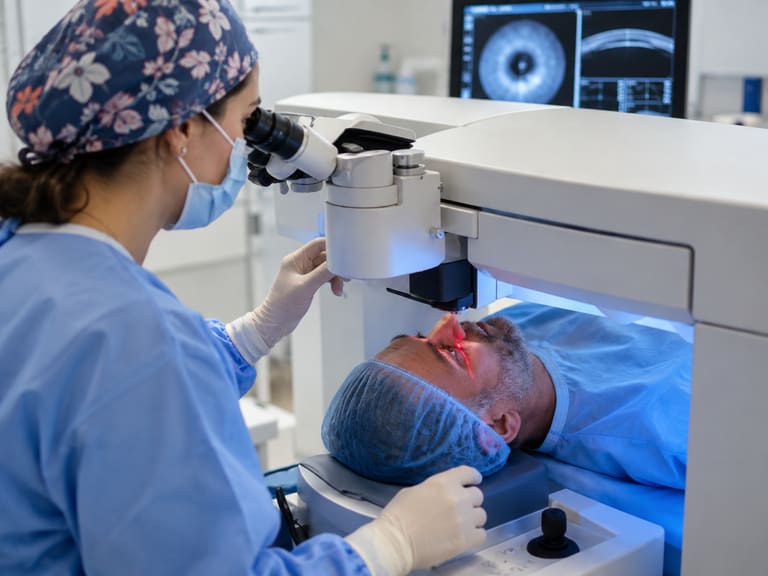
Laser correction of short sight, long sight or astigmatism, considered once your cornea has been mapped and your eyes fully examined.
View treatmentSend your details and your coordinator will explain what comes next. You are free to stop at any point.
This page is general information, not medical advice; a treating clinician confirms your plan after assessment. ELAVIA Global coordinates care; clinical evaluation and treatment are delivered by independent, licensed partner facilities and their specialists.
ELAVIA Global coordinates international patient care. Clinical services are delivered by independently operated facilities.