
A fixed set of teeth for one jaw, held on four implants, offered only when your bone and health make it suitable.
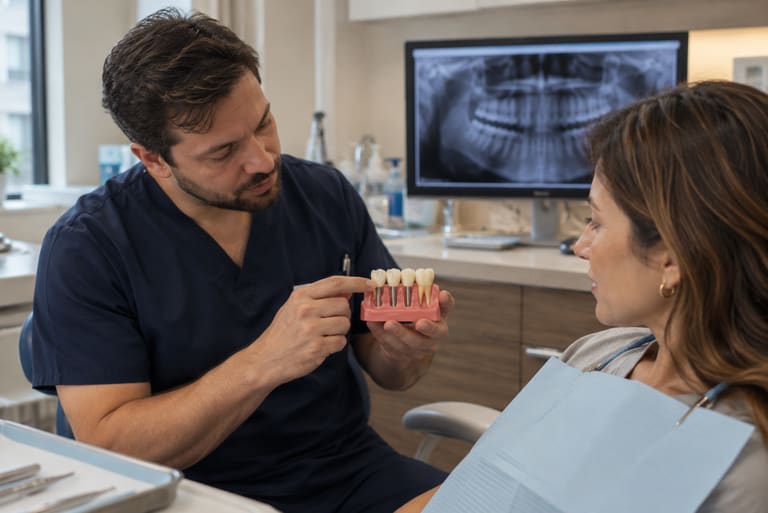
With All-on-4, a whole upper or lower row of teeth is replaced by one fixed bridge that rests on four implants. The two implants at the back are normally tilted so they reach as much bone as possible, and in some people this means a bone graft is not needed.
It suits people who have lost most of the teeth in a jaw, or whose remaining teeth cannot be rescued. Often a fixed temporary bridge goes in within a few days, and the permanent one is made once the implants have healed.
Treat this as a general outline. The dentist decides what fits only after examining you, normally with X-rays or a 3D scan, and may suggest another route or a gentler one.
A 3D scan, X-rays and a full examination show whether four implants can carry the whole row safely.
Any teeth that cannot be kept are taken out, and all four implants go in during the same session.
Provided the implants are firm, a fixed temporary bridge is attached a few days later.
Once the jaw has healed, normally after three to six months, the final bridge is made and fitted on your second trip.
Swelling and tenderness build and then start to settle. Eat soft food, avoid hot drinks until the numbness wears off and take any medicine you were prescribed.
The stitches dissolve or are taken out and the gum closes over. Brush the area gently and use any mouthwash the dentist suggests.
The implant fuses with the jawbone, a process called osseointegration. A temporary tooth or denture can fill the gap meanwhile.
When the dentist is satisfied the implant has healed, new scans or impressions are taken and the permanent crown or bridge is attached.
Look after implants just as you would your own teeth and keep up regular check-ups, so any gum problem is spotted early.
Everyone heals at their own pace, and the instructions from your clinic always come first.
Each holds a fixed bridge for a full row of teeth. All-on-6 adds two more implants to share the chewing load, and that needs more bone. The dentist suggests whichever your bone and bite can support.
No, it is not something you remove at home. The dentist can take it off at check-ups for cleaning or repair.
That depends on the work. Veneers and crowns are normally finished within a single stay of about a week. Implants usually mean two trips several months apart, because the bone needs time to heal. Your coordinator fixes the dates after the dentist has seen your X-rays or scan.
It comes down to how many teeth are treated, which materials are used and whether any groundwork is needed first. Before you book anything you get the plan and an itemised quote in writing, and you are free to say no.
All-on-4 is priced individually after a specialist reviews your case. You receive a written, itemised quote before anything is booked.
From your first message to care after you are home, in eight clear stages for patients travelling in.
Step 1 / 8
Share what you would like to treat, your health background and when you hope to travel, using a short form or a message.
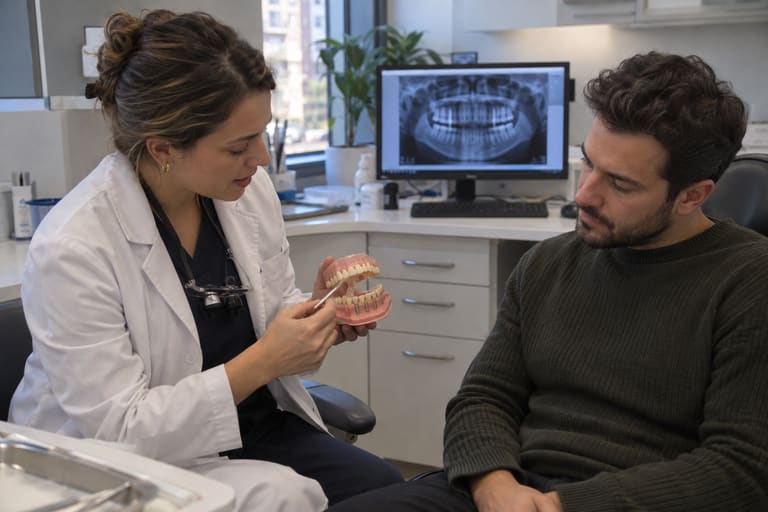
A fixed full-arch bridge supported by six implants, chosen when the dentist wants extra anchorage.
View treatment
A personal mix of cosmetic dental treatments, put in a sensible order and timed around your travel.
View treatment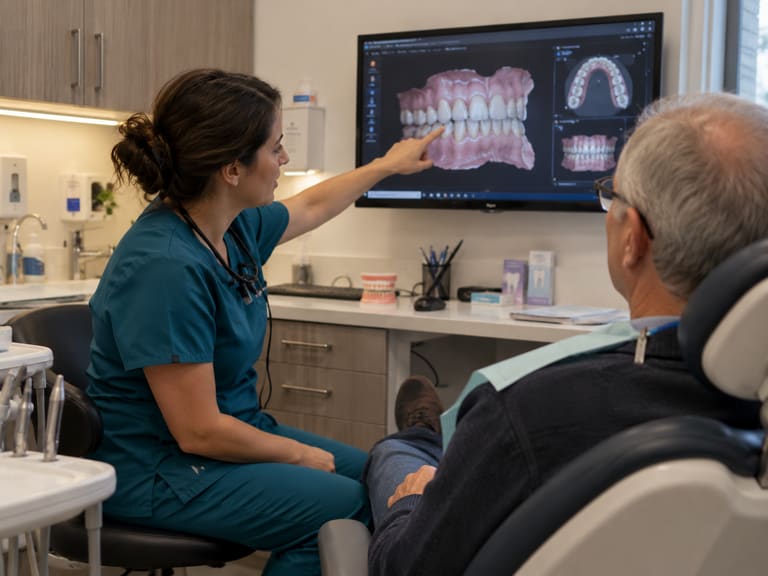
Rebuilding a mouth with many damaged or missing teeth, often in stages agreed with your dentist.
View treatmentSend your details and your coordinator will explain what comes next. You are free to stop at any point.
This page is general information, not medical advice; a treating clinician confirms your plan after assessment. ELAVIA Global coordinates care; clinical evaluation and treatment are delivered by independent, licensed partner facilities and their specialists.
ELAVIA Global coordinates international patient care. Clinical services are delivered by independently operated facilities.