
Rebuilding a mouth with many damaged or missing teeth, often in stages agreed with your dentist.
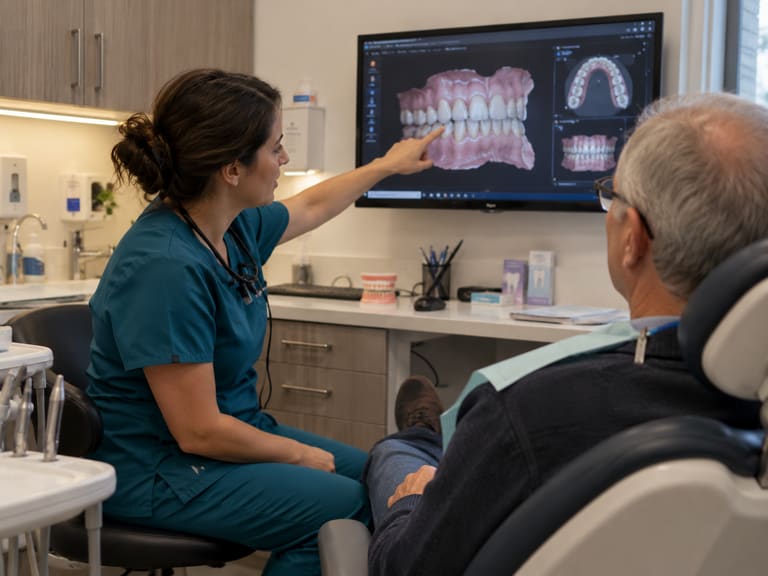
Full mouth restoration rebuilds most or all of the teeth so they work and look right again. It is for mouths where many teeth are worn, broken, decayed or gone, and it usually blends several treatments: gum care, root canal work, crowns, bridges and implants.
Since the whole bite changes, the planning goes deep. The dentist studies how your jaws close and move, and may work in stages so the tissues can heal and the new bite can be tested before the permanent pieces are made.
Treat this as a general outline. The dentist decides what fits only after examining you, normally with X-rays or a 3D scan, and may suggest another route or a gentler one.
X-rays, a 3D scan, photos and bite records show the state of every tooth and of the jaw joints.
Infections, gum disease and teeth that cannot be rescued are taken care of before anything else.
Crowns, bridges or implants go in, often starting with temporaries so the new bite can be tried out.
When the new bite has proved comfortable, the final restorations are made and fitted.
Teeth that have been prepared get temporary covers until the final pieces are ready. They look acceptable but are weaker, so stick to softer food.
The dentist tries in the finished restorations, checks how they fit, match and meet when you bite, and then fixes them in place.
A little sensitivity is normal, and it takes some days to get used to the new shape and bite. If your teeth do not meet evenly, say so: a small adjustment is quick.
The pause between stages gives gums and any implants time to settle, and gives you time to get used to the new bite.
Brush morning and night, clean between the teeth, never open packets or bottles with them, and see your dentist and hygienist at home regularly.
Everyone heals at their own pace, and the instructions from your clinic always come first.
Occasionally the main work fits into one longer stay, but anything involving implants or a change of bite usually takes two trips at least.
No. Temporary restorations or dentures fill the gaps, so you always have teeth between stages.
That depends on the work. Veneers and crowns are normally finished within a single stay of about a week. Implants usually mean two trips several months apart, because the bone needs time to heal. Your coordinator fixes the dates after the dentist has seen your X-rays or scan.
It comes down to how many teeth are treated, which materials are used and whether any groundwork is needed first. Before you book anything you get the plan and an itemised quote in writing, and you are free to say no.
Full Mouth Restoration is priced individually after a specialist reviews your case. You receive a written, itemised quote before anything is booked.
From your first message to care after you are home, in eight clear stages for patients travelling in.
Step 1 / 8
Share what you would like to treat, your health background and when you hope to travel, using a short form or a message.
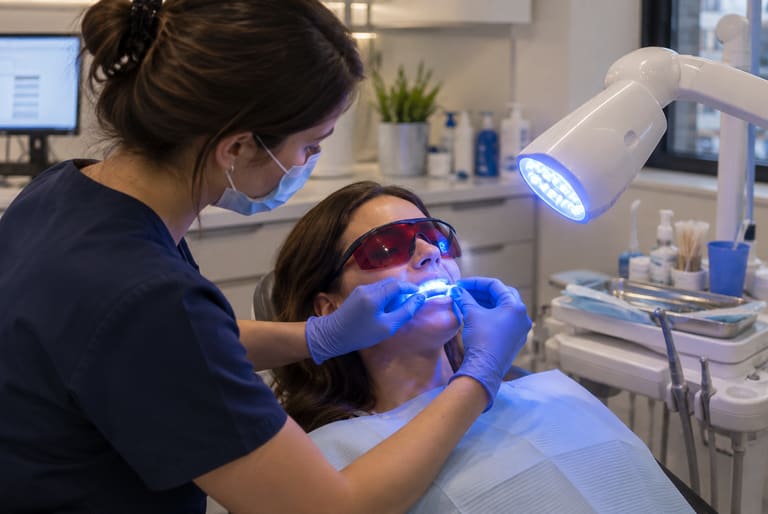
Whitening at the clinic or with a home kit, when your enamel and any existing fillings or crowns allow.
View treatment
Surgery of the mouth and jaw, planned with 3D imaging and including bone work for implants where it is needed.
View treatment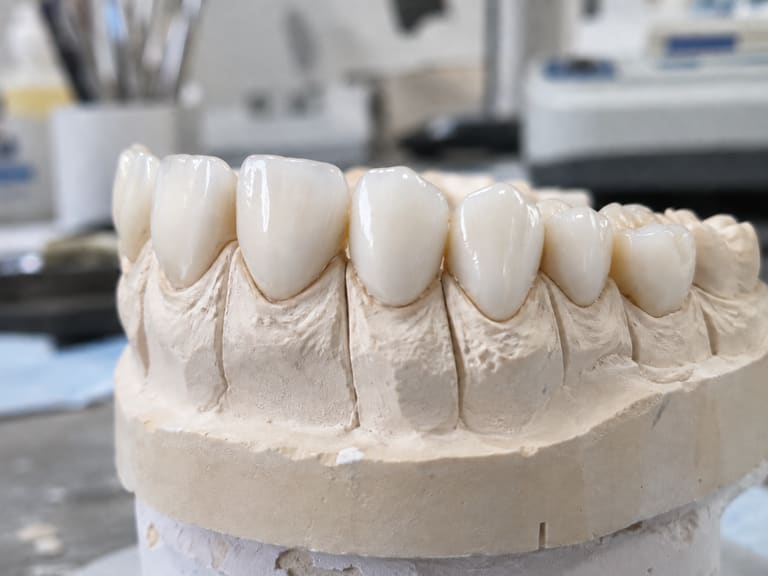
Glass-ceramic veneers known for their translucency, suggested when your bite and enamel allow only light preparation.
View treatmentSend your details and your coordinator will explain what comes next. You are free to stop at any point.
This page is general information, not medical advice; a treating clinician confirms your plan after assessment. ELAVIA Global coordinates care; clinical evaluation and treatment are delivered by independent, licensed partner facilities and their specialists.
ELAVIA Global coordinates international patient care. Clinical services are delivered by independently operated facilities.