
Whitening at the clinic or with a home kit, when your enamel and any existing fillings or crowns allow.
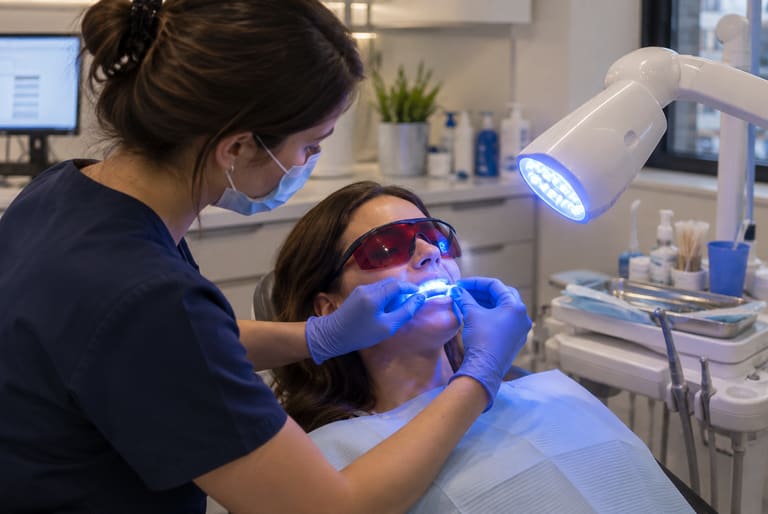
Whitening lightens the natural shade of your enamel with a gel based on peroxide. It can be done in one appointment at the clinic, at home over two weeks or so with trays made for your teeth, or as a mix of the two.
Only natural teeth respond. Crowns, veneers and fillings stay the colour they are, so if you want them to blend with your lighter teeth they may need to be replaced afterwards.
Treat this as a general outline. The dentist decides what fits only after examining you, normally with X-rays or a 3D scan, and may suggest another route or a gentler one.
The dentist looks for decay, gum trouble and existing restorations, and notes the shade you are starting from.
A barrier is placed over your gums and lips so the gel reaches the teeth alone.
At the clinic the gel goes on in timed rounds; for home use you take away made-to-measure trays and gel.
Your new shade is recorded and you get tips on making it last.
Teeth may be more sensitive and pick up stains more easily. Steer clear of very hot or cold food and of strongly coloured food and drink.
Sensitivity, if you have any, normally fades. A toothpaste for sensitive teeth can help.
The shade slowly darkens again, faster with coffee, tea, red wine or smoking. A top-up now and then can hold it.
Everyone heals at their own pace, and the instructions from your clinic always come first.
Professional whitening, used as instructed, is generally regarded as safe for enamel. Problems tend to come from overdoing it or from unregulated products.
Anywhere from several months to a few years is common. Diet, smoking and how well you clean your teeth all play a part.
Frequently, yes, if some of your own teeth will still show. The new restorations can then be matched to the lighter shade.
Teeth Whitening is priced individually after a specialist reviews your case. You receive a written, itemised quote before anything is booked.
From your first message to care after you are home, in eight clear stages for patients travelling in.
Step 1 / 8
Share what you would like to treat, your health background and when you hope to travel, using a short form or a message.
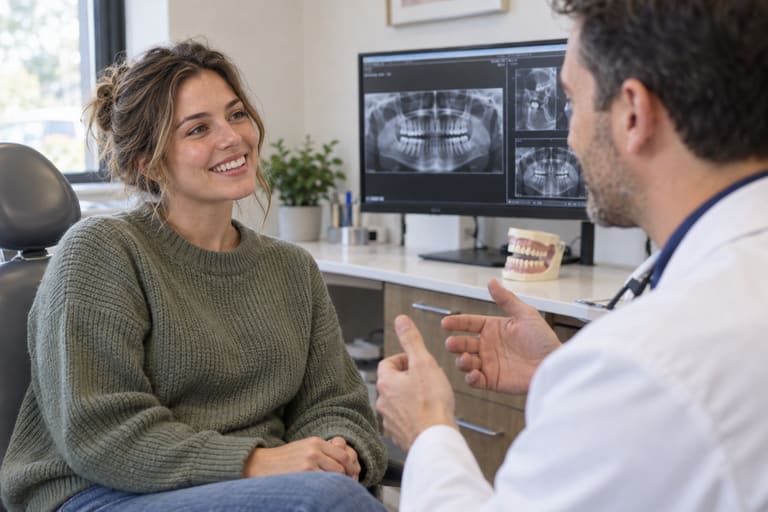
Surgery of the mouth and jaw, planned with 3D imaging and including bone work for implants where it is needed.
View treatment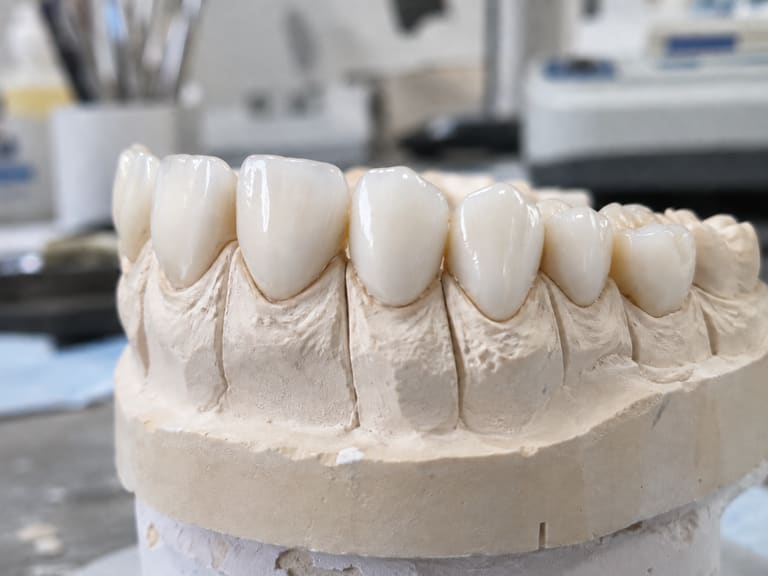
Glass-ceramic veneers known for their translucency, suggested when your bite and enamel allow only light preparation.
View treatment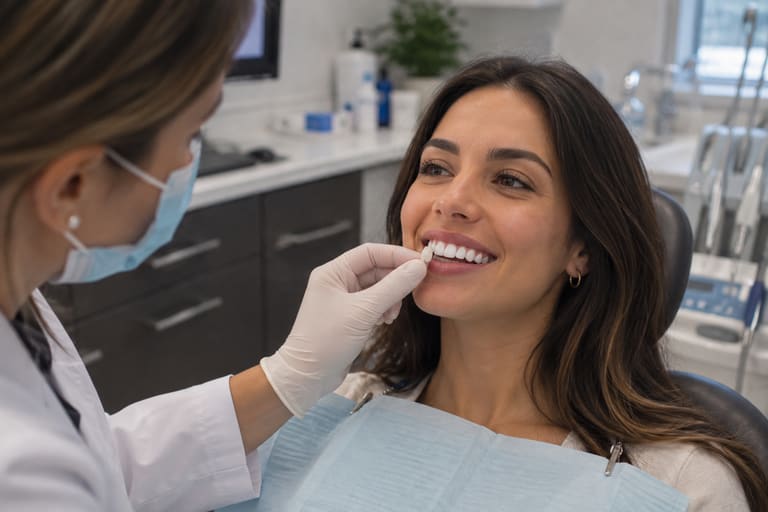
Tooth-coloured resin shaped onto the teeth to mend chips, close small gaps or refine their shape; quicker than porcelain, though it does not last as long.
View treatmentSend your details and your coordinator will explain what comes next. You are free to stop at any point.
This page is general information, not medical advice; a treating clinician confirms your plan after assessment. ELAVIA Global coordinates care; clinical evaluation and treatment are delivered by independent, licensed partner facilities and their specialists.
ELAVIA Global coordinates international patient care. Clinical services are delivered by independently operated facilities.