
A fixed full-arch bridge supported by six implants, chosen when the dentist wants extra anchorage.
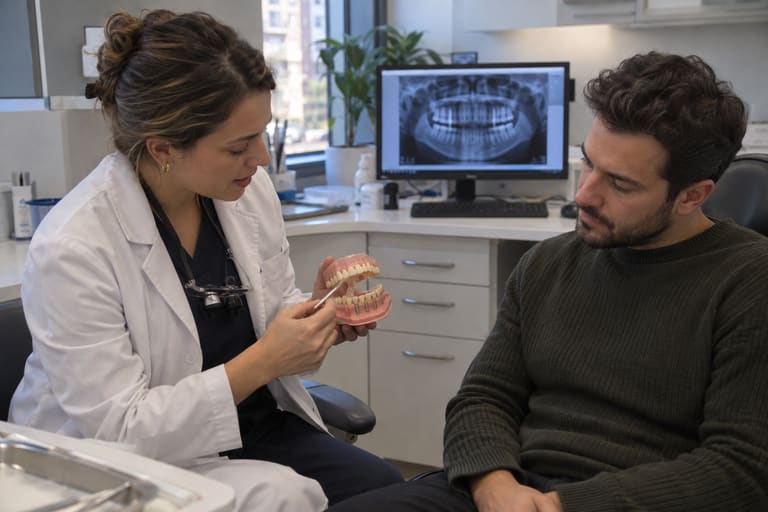
All-on-6 swaps a complete row of teeth for a fixed bridge carried by six implants. With two more anchors than a four-implant design, the force of chewing is shared out over a wider area.
Dentists tend to choose it when there is good bone along the whole jaw, when someone bites hard, or when a longer bridge needs more support. The stages mirror All-on-4: temporary teeth first, the permanent bridge after healing.
Treat this as a general outline. The dentist decides what fits only after examining you, normally with X-rays or a 3D scan, and may suggest another route or a gentler one.
A 3D scan and examination reveal whether six implants can go in safely, and exactly where.
Teeth that cannot be kept are removed and the six implants are placed, with a bone graft if necessary.
When the implants are firm enough, a fixed temporary bridge is attached within days.
After three to six months of healing, the final bridge is fitted on your second trip.
Swelling and tenderness build and then start to settle. Eat soft food, avoid hot drinks until the numbness wears off and take any medicine you were prescribed.
The stitches dissolve or are taken out and the gum closes over. Brush the area gently and use any mouthwash the dentist suggests.
The implant fuses with the jawbone, a process called osseointegration. A temporary tooth or denture can fill the gap meanwhile.
When the dentist is satisfied the implant has healed, new scans or impressions are taken and the permanent crown or bridge is attached.
Look after implants just as you would your own teeth and keep up regular check-ups, so any gum problem is spotted early.
Everyone heals at their own pace, and the instructions from your clinic always come first.
No. Extra implants add support but also demand more bone and more surgery. Which is right depends on your jaw, your bite and what the dentist finds.
With good care, implants can serve for many years. The bridge on top may need repairs or renewing along the way, especially its biting surfaces.
That depends on the work. Veneers and crowns are normally finished within a single stay of about a week. Implants usually mean two trips several months apart, because the bone needs time to heal. Your coordinator fixes the dates after the dentist has seen your X-rays or scan.
It comes down to how many teeth are treated, which materials are used and whether any groundwork is needed first. Before you book anything you get the plan and an itemised quote in writing, and you are free to say no.
All-on-6 is priced individually after a specialist reviews your case. You receive a written, itemised quote before anything is booked.
From your first message to care after you are home, in eight clear stages for patients travelling in.
Step 1 / 8
Share what you would like to treat, your health background and when you hope to travel, using a short form or a message.

A personal mix of cosmetic dental treatments, put in a sensible order and timed around your travel.
View treatment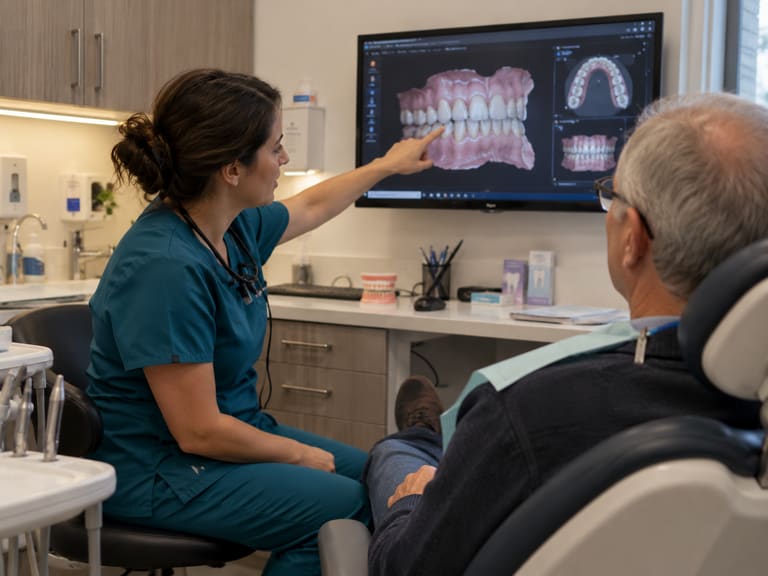
Rebuilding a mouth with many damaged or missing teeth, often in stages agreed with your dentist.
View treatment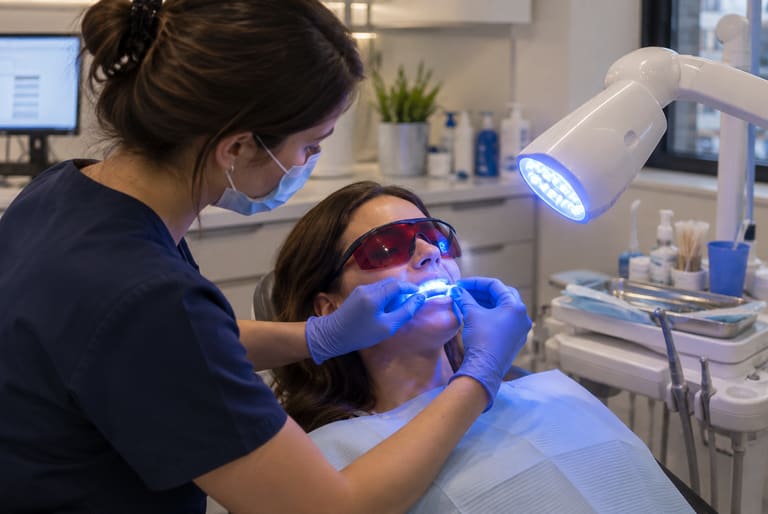
Whitening at the clinic or with a home kit, when your enamel and any existing fillings or crowns allow.
View treatmentSend your details and your coordinator will explain what comes next. You are free to stop at any point.
This page is general information, not medical advice; a treating clinician confirms your plan after assessment. ELAVIA Global coordinates care; clinical evaluation and treatment are delivered by independent, licensed partner facilities and their specialists.
ELAVIA Global coordinates international patient care. Clinical services are delivered by independently operated facilities.