
Fine porcelain shells bonded to the front of the teeth, planned one tooth at a time after an examination.
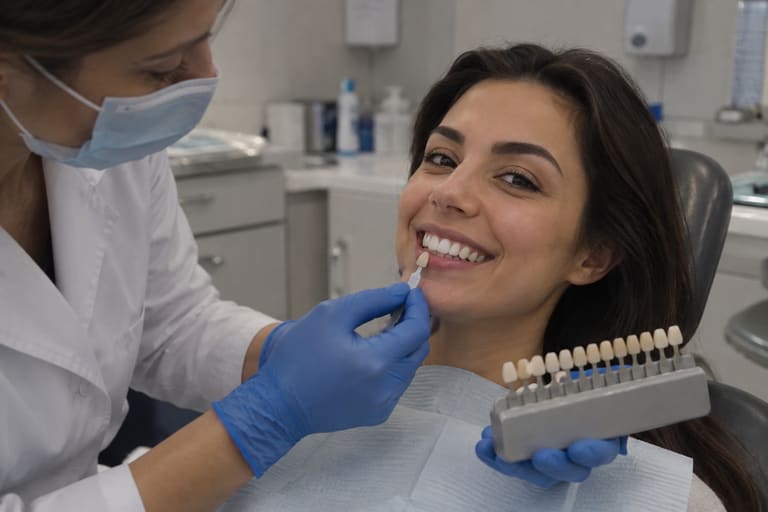
Veneers are thin porcelain facings glued onto the front of a tooth. They can change the colour, outline, length or line of front teeth that are stained, chipped, worn or a little crooked.
So that the veneer sits flush, the dentist normally shaves a fine layer of enamel off first. That cannot be undone, so every tooth is judged on its own merits and the gentlest approach that still meets your aim is chosen.
Treat this as a general outline. The dentist decides what fits only after examining you, normally with X-rays or a 3D scan, and may suggest another route or a gentler one.
You share smile photos and any recent X-rays, and the dentist tells you which teeth might be worth treating.
At the clinic your teeth are examined and scanned, and you settle the shape and colour together with the dentist.
With local anaesthetic, a fine layer of enamel is removed, the teeth are scanned and temporary veneers go on.
The finished veneers are tried on, adjusted where needed and then bonded for good.
Teeth that have been prepared get temporary covers until the final pieces are ready. They look acceptable but are weaker, so stick to softer food.
The dentist tries in the finished restorations, checks how they fit, match and meet when you bite, and then fixes them in place.
A little sensitivity is normal, and it takes some days to get used to the new shape and bite. If your teeth do not meet evenly, say so: a small adjustment is quick.
Brush morning and night, clean between the teeth, never open packets or bottles with them, and see your dentist and hygienist at home regularly.
Everyone heals at their own pace, and the instructions from your clinic always come first.
A fine layer of enamel is taken off to fit porcelain veneers, and that loss is permanent. With careful work the tooth beneath stays healthy, but from then on it will always need a veneer or similar covering.
Looked after well, porcelain veneers commonly last ten years or longer, though they will probably need renewing at some point. Grinding, biting on hard things and receding gums all wear them out sooner.
That depends on the work. Veneers and crowns are normally finished within a single stay of about a week. Implants usually mean two trips several months apart, because the bone needs time to heal. Your coordinator fixes the dates after the dentist has seen your X-rays or scan.
It comes down to how many teeth are treated, which materials are used and whether any groundwork is needed first. Before you book anything you get the plan and an itemised quote in writing, and you are free to say no.
Dental Veneers is priced individually after a specialist reviews your case. You receive a written, itemised quote before anything is booked.
From your first message to care after you are home, in eight clear stages for patients travelling in.
Step 1 / 8
Share what you would like to treat, your health background and when you hope to travel, using a short form or a message.
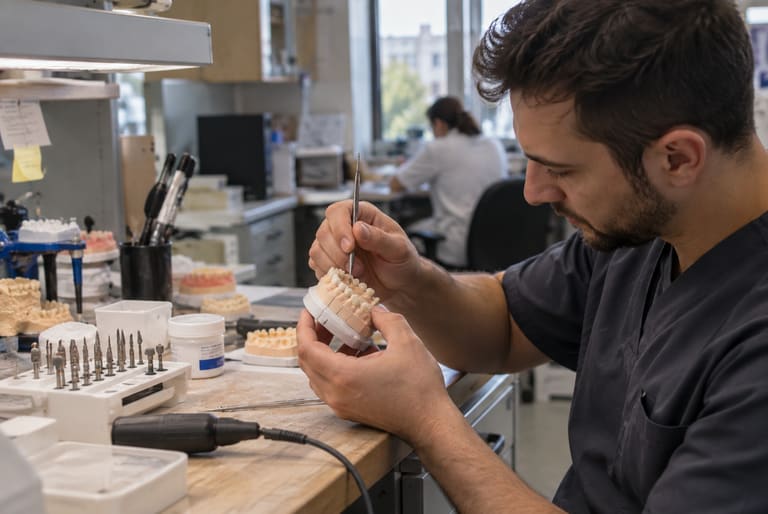
Zirconia caps that cover the whole tooth, chosen when a tooth needs strengthening or a better appearance.
View treatment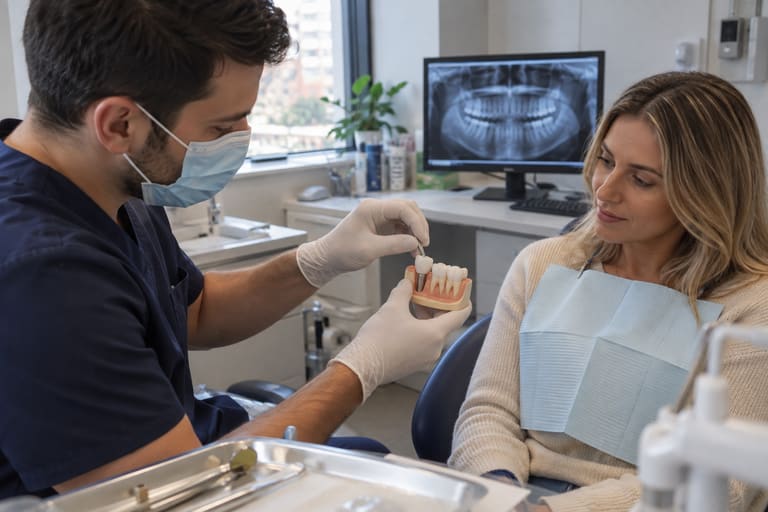
Titanium posts that replace missing teeth, planned from scans and with time allowed for the bone to heal.
View treatment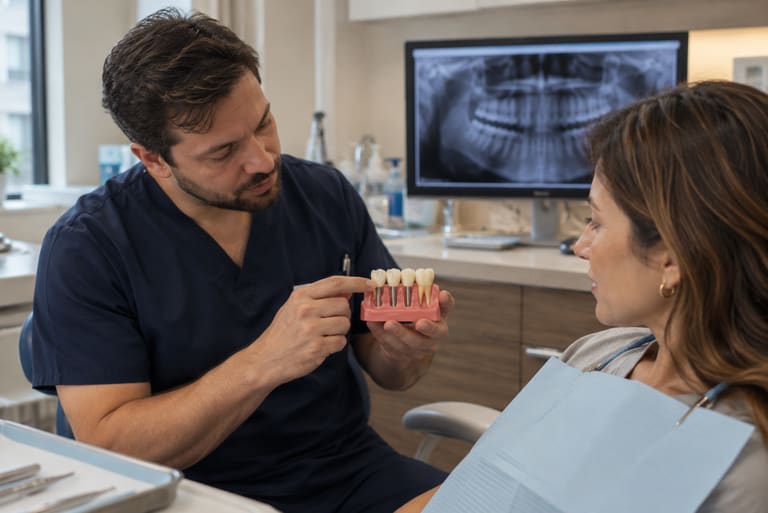
A fixed set of teeth for one jaw, held on four implants, offered only when your bone and health make it suitable.
View treatmentSend your details and your coordinator will explain what comes next. You are free to stop at any point.
This page is general information, not medical advice; a treating clinician confirms your plan after assessment. ELAVIA Global coordinates care; clinical evaluation and treatment are delivered by independent, licensed partner facilities and their specialists.
ELAVIA Global coordinates international patient care. Clinical services are delivered by independently operated facilities.