
Zirconia caps that cover the whole tooth, chosen when a tooth needs strengthening or a better appearance.
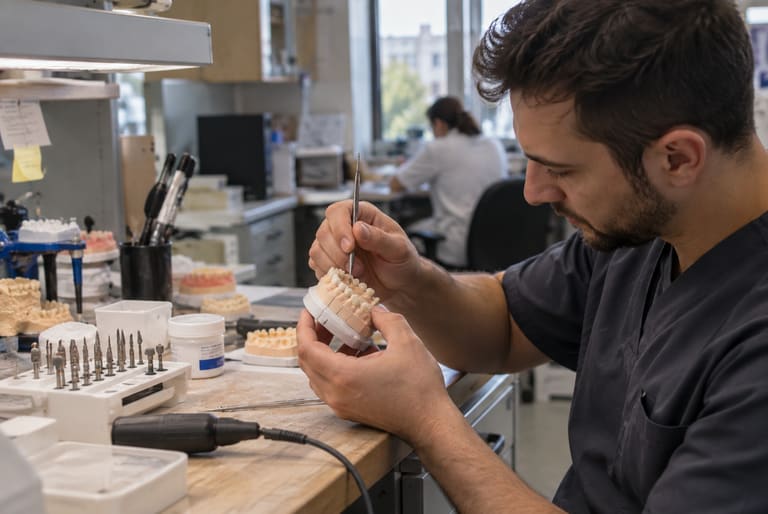
A crown fits over the entire part of a tooth you can see, like a cap. Zirconia is a tough ceramic in natural tooth colours, suitable for front and back teeth alike, and it contains no metal.
Crowns are usually the answer for a tooth that is mostly filling, cracked, root-filled or heavily worn, or they form part of a wider cosmetic plan. The tooth has to be trimmed all the way round to take a crown, so more of it is lost than with a veneer.
Treat this as a general outline. The dentist decides what fits only after examining you, normally with X-rays or a 3D scan, and may suggest another route or a gentler one.
An examination and X-rays confirm that every tooth and root is healthy enough before any crown is planned.
With local anaesthetic, the tooth is trimmed, scanned digitally and given a temporary crown.
The crown is milled from a block of zirconia and tinted to the colour you agreed.
It is tried on, adjusted until your bite feels right and then cemented for good.
Teeth that have been prepared get temporary covers until the final pieces are ready. They look acceptable but are weaker, so stick to softer food.
The dentist tries in the finished restorations, checks how they fit, match and meet when you bite, and then fixes them in place.
A little sensitivity is normal, and it takes some days to get used to the new shape and bite. If your teeth do not meet evenly, say so: a small adjustment is quick.
Brush morning and night, clean between the teeth, never open packets or bottles with them, and see your dentist and hygienist at home regularly.
Everyone heals at their own pace, and the instructions from your clinic always come first.
Zirconia is very strong and avoids the grey metal edge that can show at the gum. Both types can do the job well, and the dentist suggests one based on where the tooth is and how you bite.
In most cases, no. A tooth with deep decay or a long history of fillings may need one, before or after the crown, and X-rays usually reveal this beforehand.
That depends on the work. Veneers and crowns are normally finished within a single stay of about a week. Implants usually mean two trips several months apart, because the bone needs time to heal. Your coordinator fixes the dates after the dentist has seen your X-rays or scan.
It comes down to how many teeth are treated, which materials are used and whether any groundwork is needed first. Before you book anything you get the plan and an itemised quote in writing, and you are free to say no.
Pick your country. Flights and extra nights are added in.
At home in Canada
Zirconia crown
No reliable public price for this country
Istanbul trip total
Zirconia crown
C$1,700 – C$3,300
Usually included
Estimates compiled by ELAVIA Global from publicly available 2026 clinic price lists, flight and hotel data. Rates: ECB, 2026-10-30.
Estimates for planning only, not a quote. Your price is confirmed in a written, itemised quote after a specialist reviews your case.
From your first message to care after you are home, in eight clear stages for patients travelling in.
Step 1 / 8
Share what you would like to treat, your health background and when you hope to travel, using a short form or a message.
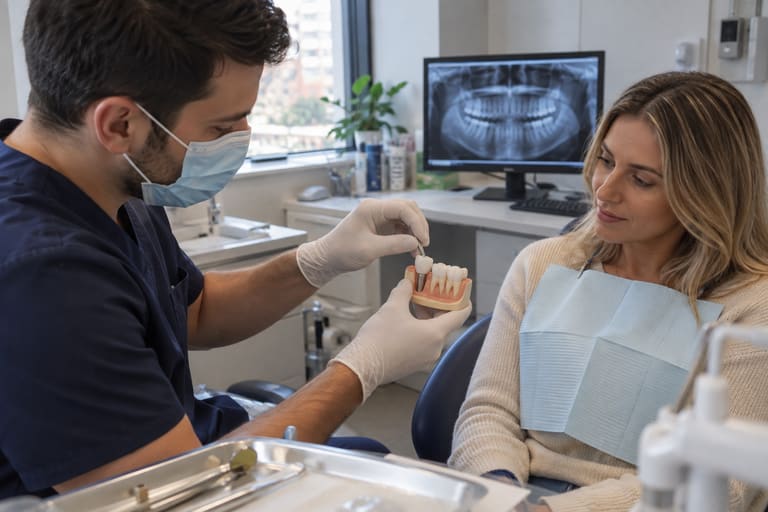
Titanium posts that replace missing teeth, planned from scans and with time allowed for the bone to heal.
View treatment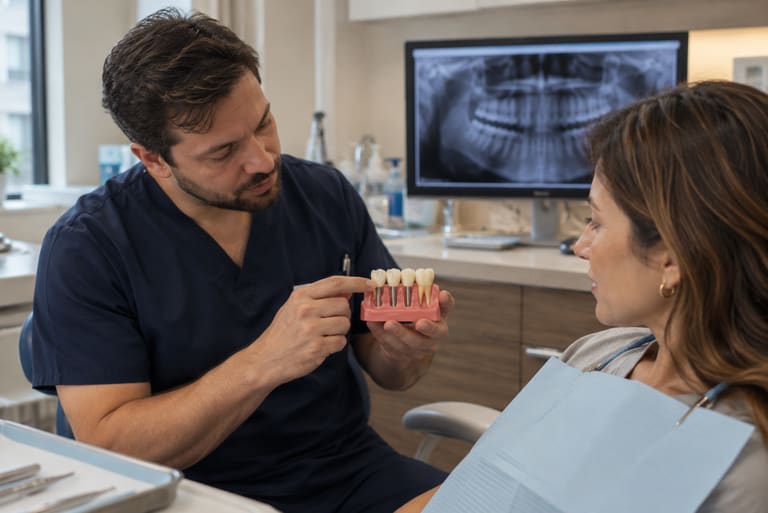
A fixed set of teeth for one jaw, held on four implants, offered only when your bone and health make it suitable.
View treatment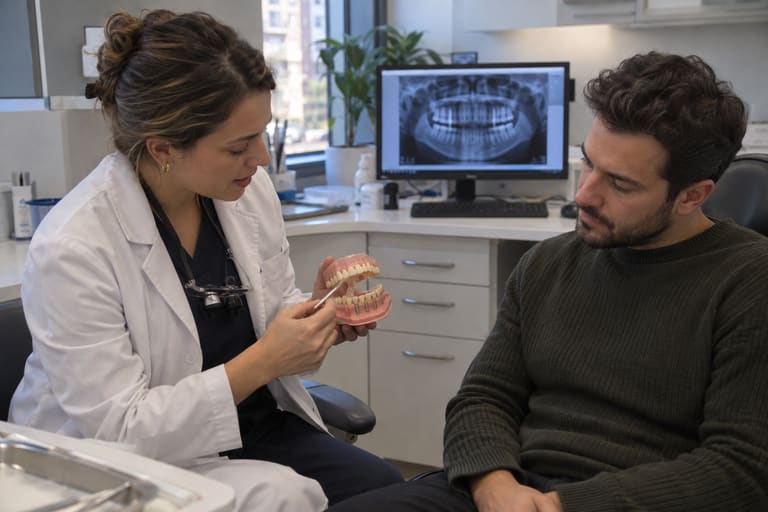
A fixed full-arch bridge supported by six implants, chosen when the dentist wants extra anchorage.
View treatmentSend your details and your coordinator will explain what comes next. You are free to stop at any point.
This page is general information, not medical advice; a treating clinician confirms your plan after assessment. ELAVIA Global coordinates care; clinical evaluation and treatment are delivered by independent, licensed partner facilities and their specialists.
ELAVIA Global coordinates international patient care. Clinical services are delivered by independently operated facilities.